Topic 14 of 16
Personal non-property relations of parents and children
16 min chapter8 formats
Statutory basis: Family Code, arts 65–89
Download
Subtopics (7)
- Personal non-property rights of minor children: concept and types
- The child's right to a first name, patronymic, and surname
- The child's right to express their views
- Rights of a parent living apart from the child
- Protection of children's rights in the context of information and communication technologies
- Protection of children from domestic abuse and violence
- Problems of restriction and deprivation of parental rights
Section 1 of 9 · Chapter
Chapter
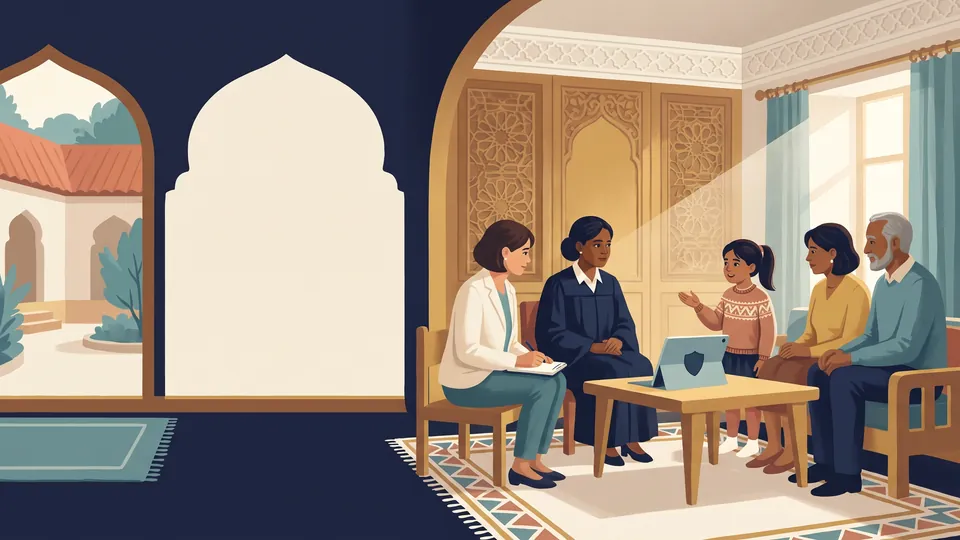
In family law, personal non-property relations between parents and children constitute one of the most vital institutions. With the progress of society and the advancement of civilisation, the legal status of the child within the family has undergone a fundamental transformation, evolving from an object of parental authority into an independent subject of rights. In this lesson, we examine the concept and types of minor children's personal non-property rights, including the rights to a name and surname, and the right to express their own views. We also analyse contemporary issues such as the contact rights of a parent living apart from the child and the protection of children's rights in the context of information and communication technologies. Throughout the lesson, particular attention is given to protecting children from domestic abuse and violence, as well as the theoretical and practical problems surrounding the restriction and deprivation of parental rights. This knowledge will serve future legal professionals as a firm foundation for resolving family disputes correctly and equitably.
14.1Personal non-property rights of minor children: concept and types
Throughout historical development, the legal status of the child has undergone a long evolution. In ancient times, including in Roman law, the father possessed absolute authority over his children, extending even to the power over their life and death. In the history of our country, from the era of the 'Avesta', rules were established designating parents and the kinship clan as responsible for child rearing, protecting the foetus, and educating children. Today, the rights of the child are protected at both international and national levels as an inalienable component of human rights. The personal non-property rights of minor children are understood as a legally protected system of non-material rights limited by a specific age and term, directly linked to the participation of parents (or persons substituting them), and directed towards the child's life, dignity, healthy lifestyle, and the realisation of personal capacities. In family law theory, the child's personal non-property rights are classified into two categories: substantive and procedural rights. Substantive rights include the right to live and be brought up in a family (Family Code, art. 65), the right to have contact with parents and other relatives (Family Code, art. 66), and the right to a first name and surname. Procedural rights encompass the rights to protect one's own rights and lawful interests, to apply to a court, and to participate in legal proceedings. Under the legislation, every child has the right to live and be brought up in a family, to know their parents, and to enjoy their care, save where this is contrary to the best interests of the child. Hypothetical example: Twelve-year-old Alisher's parents have passed away. In order to ensure his right to be raised in a family, the guardianship and trusteeship authority places him under the guardianship of his close relatives' family. According to the author's scholarly proposal, taking into account global social needs, it is expedient directly to entrench in the Family Code the child's rights to healthy development, to a favourable environment, to the use of intellectual property, and to participation in cultural life.
- Every child has the right to live and be brought up in a family (Family Code, art. 65).
- A child has the right to have contact with parents and other relatives (Family Code, art. 66).
- The protection of the rights and lawful interests of the child is carried out by the parents, and in cases provided for by law, by the guardianship and trusteeship authority, the procurator, and the court (Family Code, art. 67).
14.2The child's right to a first name, patronymic, and surname
Every child has the right to receive a surname, first name, and patronymic from the moment of birth (Family Code, art. 69). The first name is given to the child by agreement of the parents, and the patronymic is assigned according to the father's name. The child's surname is determined by the surname of the parents. If the parents have different surnames, the child is given the surname of the father or the mother by agreement between them. At the parents' request, in accordance with national traditions, a surname may also be assigned based on the paternal grandfather's first name. In the absence of agreement between the parents regarding the child's first name and surname, the dispute is resolved by the guardianship and trusteeship authority. A change of the child's first name and surname before reaching the age of 16 is effected by the civil registry office (FHDYO) on the joint application of the parents, taking into account the child's interests (Family Code, art. 70). If the first name or surname of a child who has reached the age of ten is being changed, this is permissible only with their consent. Hypothetical example: The parents are divorced and the child resides with the mother. The mother wishes to give the child her surname. If the father does not consent, the guardianship and trusteeship authority resolves the matter taking into account the interests of the child and the views of the parents. If the father is evading maintenance obligations, his opinion might not be taken into account. According to the author's scholarly proposal, cases are currently encountered where parents assign numbers, symbols, offensive words, animal names, or meaningless names alien to the national ethos to children. In order to put an end to this, it is proposed to introduce specific norms into the Family Code that restrict parents' right to choose a name within the limits of the child's interests and prohibit unconventional and eccentric names.
- The child has the right to receive a first name, patronymic, and surname (Family Code, art. 69).
- A disagreement between parents regarding the name is resolved by the guardianship and trusteeship authority (Family Code, art. 69).
- A change of the first name or surname of a child who has reached the age of 10 is permitted only with their consent (Family Code, art. 70).
14.3The child's right to express their views
The child's right to express their views is an essential safeguard of their recognition as an independent subject of family law relations. In accordance with Article 68 of the Family Code, in resolving any issue in the family affecting the child's interests, the child is entitled freely to express their views, as well as to be heard in any judicial or administrative proceedings. In doing so, authorities and officials authorised to take decisions must consider the views of the child, irrespective of the child's age, when resolving matters affecting their interests and must make decisions based on the best interests of the child. Cases in which the child's consent is mandatory are strictly defined by legislation: changing the first name or surname of a child who has reached the age of 10 (art. 70), reinstatement of parental rights (art. 82), and adoption all require the child's consent. Hypothetical example: The parents are divorcing and the court must determine with whom the child will reside. The judge hears the views of eight-year-old Malika. Although she has not yet reached the age of 10, her opinion is considered irrespective of her age and is assessed based on her best interests. According to the author's scholarly proposal, taking into account that the age of intellectual and psychological maturity of children has decreased in this era of global change, it is expedient to set the age for mandatory consideration of the child's opinion at 7 years (following the experience of certain foreign states) and to expand the list of circumstances requiring the child's opinion, such as in cases of deprivation of parental rights and establishment of paternity.
- The child is entitled to express their views on matters affecting their interests irrespective of age (Family Code, art. 68).
- Reinstatement of parental rights in respect of a child who has reached the age of 10 is permitted only with their consent (Family Code, art. 82).
14.4Rights of a parent living apart from the child
The dissolution of a marriage or separate living of the parents does not affect the rights of the child. According to Article 76 of the Family Code, a father (mother) residing separately from the child has the right to have contact with the child, participate in their upbringing, and participate in resolving matters concerning their education. The parent residing with the child must not obstruct such communication, provided it does not harm the physical and mental health of the child or their moral development. The parents may conclude a written agreement on the order of contact. If they cannot agree, the dispute is resolved by a court with the participation of the guardianship and trusteeship authority. Furthermore, a parent living separately has the right to receive information regarding their child from educational and medical institutions. The provision of information may only be refused where there is a threat to the life and health of the child. Hypothetical example: The parents are divorced and the child lives with the mother. Because the father is late in paying maintenance, the mother refuses to allow the child to see the father. This is unlawful. Maintenance arrears do not extinguish contact rights. According to the author's scholarly proposal, living at a distance has increased among parents today owing to labour migration and other reasons. Therefore, it is proposed to introduce into legislation the institution of 'virtual visits'—meaning communication via information and communication technologies (video calls, messaging applications)—and to impose an obligation on the parent residing with the child to create the conditions for such virtual contact.
- A parent living separately has the right to contact with the child and to participate in their upbringing (Family Code, art. 76).
- The dispute is resolved by the court taking into account the best interests and views of the child (Family Code, art. 76).
- Grandfathers, grandmothers, and other close relatives also have the right to have contact with the child (Family Code, art. 77).
14.5Protection of children's rights in the context of information and communication technologies
While the rapid development of information and communication technologies creates broad opportunities for children, it also gives rise to serious threats to their information security. Under the Law 'On Guarantees of the Rights of the Child', every child has the right to receive information that does not harm their health, moral, and spiritual development. The use of information containing pornography, cruelty, and violence, or having a harmful influence on children, is prohibited. In accordance with Article 73 of the Family Code, parents are responsible for the upbringing and development of their children. They are obliged to care for the physical, mental, and spiritual development of their children. In the digital space, this obligation entails protecting the child from harmful content, cyberbullying, and dangerous games. Hypothetical example: Thirteen-year-old Jasur joined dangerous internet groups promoting suicide. Noticing changes in his behaviour, his parents monitored his internet use and provided psychological assistance. This demonstrates the parents fulfilling their duty to protect the child from dangerous information. According to the author's scholarly proposal, it is necessary to establish the rights and duties of parents regarding the protection of children from harmful information in a separate article of the Family Code. In particular, it is proposed to impose an explicit obligation on parents to restrict the child's access to information incompatible with their age and detrimental to their health and development, as well as to implement 'parental control' software programmes on a national scale.
- Parents are obliged to care for the health, mental, and spiritual development of their children (Family Code, art. 73).
- Protecting the child from harmful information requires cooperation between the state and parents (Law 'On Guarantees of the Rights of the Child').
14.6Protection of children from domestic abuse and violence
Upbringing of a child in a family is the priority form that guarantees their rights and interests. According to Article 67 of the Family Code, a child has the right to protection from abuses by parents (persons substituting them). When the rights and lawful interests of the child are violated, or when parents fail to perform their duties or abuse their rights, the child has the right to apply to the guardianship and trusteeship authority, and upon reaching the age of 14, independently to apply to a court. Persons who become aware of a threat to the life or health of a child are obliged immediately to report this to the guardianship and trusteeship authority. According to the author's scholarly analysis, domestic violence is not limited solely to the use of physical force. It encompasses psychological (insult, humiliation, intimidation), physical (causing bodily injury), sexual (threats to sexual freedom), and economic (failure to provide material maintenance) forms. Hypothetical example: A father regularly consumes alcohol, beats his 11-year-old son without reason, and insults him. The neighbours, observing this situation, notify the guardianship and trusteeship authority. The authority immediately removes the child to a safe place and files a claim in court to take measures against the father. According to the author's scholarly proposal, it is necessary to provide an explicit statutory definition of the concept of 'violence against a child' and its forms (psychological, physical, sexual, economic) in legislation, and to enact a dedicated law 'On the Protection of Children from Harassment and Violence'.
- A child has the right to protection from abuses committed by parents (Family Code, art. 67).
- A child who has reached the age of 14 may independently apply to a court to protect their rights (Family Code, art. 67).
- When there is an immediate threat to a child's life, the guardianship and trusteeship authority has the right to remove the child immediately (Family Code, art. 87).
14.7Problems of restriction and deprivation of parental rights
Deprivation of parental rights and restriction of parental rights are measures of last resort, used as extraordinary remedies to protect the child. Article 79 of the Family Code sets out exhaustive grounds for deprivation of parental rights: evasion of parental duties (including evasion of maintenance payments), refusal without valid reason to take the child from an institution, abuse of rights, cruel treatment of the child, chronic alcoholism or drug addiction, and the commission of an intentional crime. Deprivation is carried out exclusively through judicial procedure. Restriction of parental rights (art. 83), on the other hand, consists in removing the child without depriving the parents of parental rights. This measure is applied when leaving the child with the parents is dangerous owing to reasons beyond the parents' control (for example, mental illness), or where there are insufficient grounds for deprivation, yet remaining with the parents poses a danger to the child. If the parents do not alter their conduct, a claim for deprivation must be filed after 6 months. In both instances, parents are not released from the obligation to provide maintenance for the child (arts 81, 84). Hypothetical example: A mother suffers from a severe mental illness and cannot manage her actions. To ensure the safety of the child, the court restricts the mother's parental rights and transfers the child to the guardianship authority. Since the mother is not at fault here, she is not fully deprived of parental rights. According to the author's scholarly conclusion, deprivation of parental rights is not an automatic process; rather, in every case, the best interests of the child, the personality of the parent, and the prospects for rehabilitation must be thoroughly examined by the court.
- Deprivation of parental rights is carried out exclusively through a court on strict statutory grounds (Family Code, arts 79, 80).
- A parent deprived of or restricted in rights is not released from paying maintenance (Family Code, arts 81, 84).
- Restriction may also be applied for reasons beyond the parents' control (Family Code, art. 83).
Section 2 of 9
Summary
In this lesson, the legal framework, theoretical concepts, and practical problems of personal non-property relations between parents and children have been examined. The personal non-property rights of a minor child include the rights to live and be brought up in a family, to receive a first name and surname, to express their views, and to maintain contact with parents. Under the legislation, a child is entitled to express their views irrespective of age, and from the age of 10, their consent is mandatory in matters such as changing their name. A divorce between parents does not affect the rights of the child; a father or mother living separately retains the right to participate in the child's upbringing and to have contact with them. In the conditions of modern information and communication technologies, protecting the child from harmful information has become a vital duty of parents. Furthermore, the lesson highlighted the mechanisms for protecting children from all forms of domestic abuse and violence (physical, psychological, sexual, economic). The grounds for deprivation and restriction of parental rights, their differences, and their legal consequences were analysed. It was particularly emphasised that even when these measures are applied, parents are not released from the obligation to maintain the child. Through the author's scholarly proposals, prospects for further improving the legislation were outlined.
Key principles
- 1The best interests of the child are of paramount importance in any decision-making.
- 2The child is not an object of parental authority, but an independent subject of rights.
- 3Dissolution of marriage between parents does not restrict the child's right to contact.
- 4The child's views must be heard irrespective of age; consent is obtained from the age of 10.
- 5Protecting the child from harmful information in the digital environment is a statutory obligation of parents.
- 6Any manifestation of domestic violence is prohibited by law and requires state intervention.
- 7Deprivation or restriction of parental rights does not extinguish the obligation to pay maintenance.
Key terms
- Personal non-property rights
- Deprivation of parental rights
- Restriction of parental rights
- Priority of the child's interests
- Guardianship and trusteeship authority
- Virtual visits
- Information security
- Psychological violence
- Age of consent
Exam checklist
- Can you enumerate the types of personal non-property rights of the child?
- In which cases is the consent of the child mandatorily required (specify the age)?
- How is the contact right of a parent living apart from the child exercised?
- What are the principal differences between deprivation of parental rights and restriction of parental rights?
- Is a person deprived of parental rights released from paying maintenance?
- What duties do parents have in protecting a child from harmful information?
- What forms of domestic violence exist and what consequences do they entail?
Section 3 of 9
Cases (IRAC)
Case 1
Changing a Child's Name and Taking Their Opinion into Account
- Facts
Spouses Rustam and Malika were lawfully divorced. Their 11-year-old son, Jasur, resides with his mother, Malika. Malika reverted to her maiden surname and wishes to change her son Jasur's surname to her own as well. Furthermore, she submitted an application to the guardianship and trusteeship authority seeking to change Jasur's first name to Jahongir. Rustam firmly objects to this situation and does not consent to the alteration of the child's surname and first name. Jasur himself expressed his wish to retain his father's surname and not to change his first name. A legal issue has arisen regarding what decision the guardianship and trusteeship authority should make in light of the absence of the father's consent and taking the child's opinion into account.
- Issue
When parents live separately, what is the legal significance of the consent of a child over 10 years of age and the opinion of the father regarding the alteration of the child's first name and surname?
- Rule
Under Family Code, art. 70, changing the first name or surname of a child who has attained the age of ten is permitted only with the child's consent. If the parents live separately and the parent with whom the child resides wishes to confer his or her surname upon the child, the guardianship and trusteeship authority shall resolve this issue taking into account the best interests of the child and the opinion of the other parent. Pursuant to Family Code, art. 68, a child has the right to express their opinion freely in the family when any issue affecting the child's interests is being resolved.
- Analysis
- In accordance with the legislation, changing a child's first name and surname before the child attains the age of sixteen is carried out with the permission of the guardianship and trusteeship authority. Where parents live separately and the parent residing with the child wishes to confer their surname upon the child, the opinion of the other parent must necessarily be taken into account. 2) Pursuant to Family Code, art. 70, changing the first name or surname of a child who has reached 10 years of age is permitted solely with their voluntary consent. Because Jasur is 11 years old, changing his first name and surname without his consent is legally impossible. This rule is aimed at protecting the child's personal non-property rights. 3) Jasur has openly declared his opposition to changing his first name and surname. Proceeding from the best interests of the child, the guardianship and trusteeship authority must take into account his personal opinion and the father's objection, and dismiss the mother's application.
- Conclusion
Since Jasur is 11 years old, the law strictly requires his consent to change his first name and surname. Due to the lack of the child's consent and the father's objection, the first name and surname shall not be changed.
Discussion questions
- 1What is the procedure for changing a child's first name and surname?
- 2Is the consent of a child who has reached the age of ten mandatory when changing their first name and surname?
- 3How is a dispute resolved in the absence of an agreement between the parents?
Case 2
The Right of Contact of a Father Living Separately with the Child
- Facts
Spouses Sanjar and Nodira divorced through judicial proceedings. The court determined that their 7-year-old daughter, Laylo, would reside with her mother, Nodira. Sanjar wishes to see his daughter every weekend. Nodira, however, categorically resists Sanjar seeing their daughter. Nodira asserts that during meetings Sanjar speaks ill of the mother to the daughter, exerts a negative psychological impact on the child, and incites her against her mother. Sanjar, asserting his right as a father to participate in the child's upbringing and to maintain contact with her, applied to the guardianship and trusteeship authority.
- Issue
How is the right of contact of a father living separately from the child exercised, and is the mother's objection to these meetings lawful?
- Rule
Under Family Code, art. 76, a parent living separately from the child has the right of contact with the child and the right to participate in their upbringing. The parent with whom the child resides must not hinder contact between the child and the other parent, provided that such contact does not cause harm to the child's physical and mental health or moral development. If the parents cannot reach an agreement, the dispute shall be resolved by the court with the participation of the guardianship and trusteeship authority upon the demand of the parents.
- Analysis
- In accordance with the legislation, although Sanjar lives separately from the child, he retains the personal non-property right to see his daughter Laylo and participate in her upbringing. Parental divorce does not extinguish the child's right to communicate with the father. 2) Nodira may object only if the meetings cause harm to the child's physical and mental health or moral development. While Sanjar inciting the child against the mother could potentially harm the child's mental state, this circumstance must be established and proved by the guardianship and trusteeship authority or the court. 3) Because the parents failed to reach a mutual agreement regarding the contact schedule, the dispute must be resolved through court proceedings. The court, considering the opinion of the guardianship and trusteeship authority and proceeding from the best interests of the child, shall establish the time, place, and schedule of contact.
- Conclusion
Sanjar has the right of contact with his daughter. If it is proven that the meetings cause harm to the child's mental health, the court may restrict contact or establish it under specified conditions, for instance, in the presence of an officer from the guardianship and trusteeship authority.
Discussion questions
- 1What rights does a parent living separately from the child possess?
- 2In what circumstances may the parent residing with the child object to meetings?
- 3How is a dispute regarding the contact schedule resolved?
Case 3
Restriction of Parental Rights and Child Protection
- Facts
Eight-year-old Umida's mother has died. She resides with her father, Botir. Recently, Botir fell into severe depression and began chronically abusing alcohol. He arrives home intoxicated, causes disturbances, and occasionally leaves Umida unattended. Neighbours reported this situation to the citizens' self-government body of the mahalla and to the guardianship and trusteeship authority. When officers of the guardianship and trusteeship authority examined the situation, they established that leaving the child with the father posed a danger to her life and health. However, Botir states that he loves his daughter, has never beaten her, and requests that he not be deprived of parental rights.
- Issue
When a father's behaviour poses a danger to a child, what is the procedure for restricting his rights and protecting the child without depriving him of parental rights?
- Rule
Under Family Code, art. 83, the court may, taking into account the best interests of the child, issue a judgment to remove the child from the father without depriving him of parental rights (restriction of parental rights). Restriction is permissible if leaving the child with the father poses a danger to the child as a consequence of his behaviour. Pursuant to art. 87, where there is an immediate threat to the life or health of the child, the guardianship and trusteeship authority has the right to remove the child immediately.
- Analysis
- If the guardianship and trusteeship authority identifies an immediate threat to the child's life and health, it is obligated to remove Umida immediately from the father based on an act of the citizens' self-government body and promptly notify the procurator. 2) Botir's chronic alcoholism and neglect of his daughter pose a serious danger to the child. Even if the court finds insufficient grounds to permanently deprive Botir of parental rights, it may, in the best interests of the child, restrict his parental rights. If he does not reform his behaviour within 6 months, an action for deprivation of parental rights shall be initiated. 3) A parent whose rights are restricted loses the right to personally raise the child, but is not relieved of the duty to maintain (pay child support/alimony for) the child.
- Conclusion
Because Botir's behaviour poses a danger to the child, the court must restrict his parental rights and transfer the child into the care of the guardianship and trusteeship authority. This serves as a safeguard to protect the child from family abuse and peril.
Discussion questions
- 1What emergency measures are taken when a danger arises to a child's life or health?
- 2In what circumstances is restriction of parental rights applied?
- 3What are the legal consequences of restricting parental rights?
Section 4 of 9
Quiz
Multiple choice
Your answers are saved in this browser.
Open questions
15In an era of rapid advancement in information and communication technologies, how do the personal non-property obligations of parents manifest in safeguarding a child's privacy and personal data? What legislative amendments are being proposed?
Show model answerHide model answer
Model answer
Today, under the conditions of information and communication technologies, securing children's personal non-property rights, particularly their information security, is becoming one of the most vital duties of parents. Under Family Code, art. 73, parents are responsible for the health, mental, and spiritual development of the child. However, the legislation does not explicitly articulate a direct duty to ensure information security. In practice, children encounter diverse threats online (cyberbullying, harmful content, dissemination of personal data). Parents must supervise the information received by the child and shield them from harmful material. According to the author's scholarly approach, it is necessary to expand the scope of parental personal non-property rights and duties towards their children. As an alternative viewpoint, some argue that information security is solely the responsibility of the state and educational institutions; however, a child spends the majority of their time within the family. Consequently, the author proposes incorporating an express statutory duty into the Family Code obliging parents to protect children from harmful information. This would mandate parents to restrict access to age-inappropriate content, thereby serving to guarantee the child's psychological and physical integrity.16What are the primary legal and practical distinctions between the restriction of parental rights and the deprivation of parental rights? In which circumstances does each measure better serve the best interests of the child?
Show model answerHide model answer
Model answer
Deprivation of parental rights and restriction of parental rights are the most stringent measures in family law, their principal objective being the protection of the child's rights and interests. Under Family Code, art. 79, deprivation of parental rights is applied in the presence of culpable misconduct by the parent (evasion of child support, cruelty, chronic alcoholism, etc.) and permanently strips the parent of all legal rights associated with the child. Conversely, restriction of parental rights (art. 83) is applied primarily where a danger to the child arises without the fault of the parent (e.g. mental illness, severe distress) or where sufficient grounds for deprivation are lacking, functioning as a preventive warning measure. Under restriction, the parent is temporarily deprived of the right to personally raise the child, but parental rights are not extinguished entirely. In an alternative approach, some practitioners advocate immediate deprivation in any dangerous situation. However, under the principle of the paramountcy of the child's best interests (UN Convention on the Rights of the Child), removing a child from the family must be a measure of last resort. Restricting parental rights affords the parent a 6-month period to rehabilitate their conduct. This measure is more humane and compatible with the child's interests from the standpoint of preserving the family unit and securing the child's right to live with their biological parents.17How is the child's right to express their own opinion exercised, and why does the legislation specify the attainment of 10 years of age for situations where the child's consent is mandatory? Should this age threshold be lowered?
Show model answerHide model answer
Model answer
Under Family Code, art. 68, a child has the right to express their opinion freely in the family when any issue affecting their interests is being resolved. Authorised bodies are required to examine the child's opinion regardless of the child's age. Nevertheless, in serious matters such as changing a first name and surname (art. 70) or restoring parental rights (art. 82), the statute strictly demands the affirmative consent of a child who has reached 10 years of age. The reason is that, psychologically and socially, a 10-year-old child is deemed capable of understanding the consequences of their actions and independently formulating their personal will. From age 10 onwards, the child's view is not merely a factor to be considered, but an expression of will entailing direct legal consequences. As an alternative approach, drawing upon comparative foreign practice (e.g. Ukraine, Switzerland), the author proposes in her monograph lowering the age for considering the child's opinion to 7 years and expanding the list of proceedings requiring the child's view (such as deprivation of parental rights and contact with relatives). In today's era of acceleration and digitalisation, children achieve social maturity considerably earlier. This proposal further reinforces the child's role as an active participant in matters governing their own destiny.
Section 5 of 9
Glossary
10 of 10 terms
- Personal non-property rights
- A system of non-material rights protected by law that arise upon a child's birth, are inalienable from them, and serve to individualise the person in society.
- Example: A child's right to acquire a name and to communicate with their parents constitutes part of their personal non-property rights.
- Related:FamilyRights of the child
- Deprivation of parental rights
- The judicial forfeiture of all rights in respect of a child resulting from a parent's failure to discharge their duties, cruel treatment of the child, or endangerment of the child's life.
- Example: Sardor was deprived of parental rights by the court due to his chronic alcohol abuse and physical violence towards his children.
- Related:Restriction of parental rightsGuardianship
- Restriction of parental rights
- A measure whereby a child is removed from their parents pursuant to a court judgment without depriving the parents of parental rights, taking into account the best interests of the child.
- Example: When a danger arose to the child's life due to the mother's mental illness, the court rendered a judgment on the restriction of her parental rights.
- Related:Deprivation of parental rights
- Child's right to express their opinion
- The opportunity of a child to express their views freely whenever any matter affecting their interests is resolved in the family, as well as during judicial or administrative proceedings.
- Example: During the parents' divorce, ten-year-old Anvar expressed to the court his wish to live with his mother, and the court took this into account.
- Related:Rights of the child
- Information security
- The state of protection of a child from information that harms their health, intellectual, and psychological development, including material promoting violence and cruelty.
- Example: The parents installed specialised parental control software to ensure their child was protected from harmful internet games and threats.
- Related:Personal non-property rights
- Domestic violence
- Unlawful acts committed by one family member against another through physical, psychological, sexual, or economic coercion, violating their rights and legitimate interests.
- Example: Constant insults and humiliation directed at a child by their father constitute domestic psychological abuse against the child.
- Related:Psychological abusePhysical abuse
- Psychological abuse
- Cruel interference with a child's mental and spiritual development through ridicule, humiliation, incessant criticism, intimidation, and similar conduct.
- Example: A stepmother's persistent belittling of a child and threatening them with house arrest is classified as psychological abuse.
- Related:Domestic violence
- Child's right to protection
- The right of a child to have their rights and lawful interests defended through parents, the guardianship authority, the procurator, or the court, as well as protection from abuses.
- Example: When his parents failed to perform their duty to provide education, fourteen-year-old Vali independently applied to court.
- Related:Guardianship and trusteeship authority
- Right of a parent living separately
- The right of a father or mother residing separately from the child to maintain contact, take part in their upbringing, and participate in resolving matters concerning their education.
- Example: The divorced father exercises his right to see his child every weekend and take him on outings.
- Related:Parental rights
Section 6 of 9
Timeline
Evolution of children's rights and parental relations
1989
Convention on the Rights of the Child
This international instrument adopted by the UN defined a child as any person under the age of 18 and set out their rights to life, a name, and protection.
Significance: The primary instrument guaranteeing children's rights at the international level.
1998
Family Code of the Republic of Uzbekistan
The fundamental legislative act regulating family relations in Uzbekistan, including children's personal non-property rights and parental obligations, was adopted.
Significance: The legal foundation of the national family law system was created.
2008
On Guarantees of the Rights of the Child
A dedicated law was enacted consolidating the child's personal non-property rights, including guarantees to receive information, protection, and freedom of expression.
Significance: State mechanisms for protecting children's rights were strengthened.
2017
Protection from harmful information
The law on protecting children from information harmful to their health was adopted, defining types of harmful content and the procedure for restricting it.
Significance: Protection of children in the sphere of information security was established by statute.
2026
Paramountcy of the child's interests
Through amendments to the Family Code, the paramountcy of the child's interests in court and within the family, as well as the rules on taking their views into account, were consolidated.
Significance: Children's rights were fully harmonised with modern international standards.
Section 7 of 9
Mind map
Select a node to read its note; a click or Enter opens its branch. Drag to move; pinch or Ctrl + wheel to zoom.
Outline
The same map as a list: it reads well on any screen, with a screen reader and in print.
Parent and Child Relations
The system of children's personal non-property rights and parental obligations in family law.
5 branches
1
Rights of the Child
Fundamental personal rights guaranteed in the Family Code.
Living in a Family
The right to live with parents and be raised by them (Family Code, art. 65).
Expressing an Opinion
The right to be heard on matters concerning their interests (Family Code, art. 68).
Regardless of Age
Courts and authorities must hear the child's opinion.
Consent from Age 10
Child's consent is mandatory for changing a name and restoring parental rights.
First Name and Surname
The right to acquire a first name, patronymic, and surname at birth (Family Code, art. 69).
Procedure for Alteration
Up to age 16, altered via the civil registry office (FHDYO) on parental application.
Right to Protection
Protection against abuses and legal violations (Family Code, art. 67).
2
Parental Rights and Duties
Equal rights and obligations in respect of the child (Family Code, art. 71).
Equality of Rights
The father and mother bear equal responsibility for the child.
Education and Upbringing
Responsibility for the child's comprehensive development (Family Code, art. 73).
Pre-eminent Right
Have a pre-eminent right over all other persons.
Securing Education
Obligated to ensure the child obtains statutory education.
Statutory Representation
Defending the child's interests before courts and other bodies (Family Code, art. 74).
3
Living Separately
Exercising rights when parents divorce (Family Code, art. 76).
Contact
The right to see the child and participate in upbringing.
Written Agreement
Parents may enter into an agreement on the contact schedule.
Resolution by Court
Where a dispute arises, the court resolves it with the participation of the guardianship authority.
Obtaining Information
Receiving data regarding the child from educational and medical institutions.
Rights of Relatives
Right of contact for grandparents and other relatives (Family Code, art. 77).
4
Safety and Protection
Shielding the child from modern threats and violence.
Information Security
Protection against harmful information and online perils.
Parental Supervision
Duty to monitor and restrict the child's information consumption.
Domestic Violence
Forms of unlawful coercion committed against the child.
Psychological Abuse
Coercion through insults, humiliation, and intimidation.
Physical Abuse
Use of force or infliction of bodily injury.
5
Measures of Liability
Procedure for deprivation and restriction of parental rights.
Deprivation of Rights
Consequence of failing to discharge parental duties (Family Code, art. 79).
Grounds
Non-payment of child support, cruelty, commission of a crime.
Consequences
Forfeiture of cohabitation and privileges, but maintenance duty persists.
Restriction of Rights
Temporary removal of the child to shield them from danger (Family Code, art. 83).
Hazardous Condition
Illness beyond parental control or dangerous behavioural conduct.
Restoration of Rights
Judicial restoration upon reform of behaviour (Family Code, art. 82).
Section 8 of 9
Walkthrough and diagram
Animated walkthrough
Step 1 of 6
Exercise of rights by a parent living separately
The dissolution of marriage or separate living of parents does not extinguish the child's right to have contact with them. Let us examine how this process is carried out step by step.
Captions on screen
- Event
- Institution
- Principle
- Concept
- Case
Relationships in this diagram
- Failure to perform obligations → Notification → Guardianship and trusteeship authority
- Perpetration of violence → Notification → Guardianship and trusteeship authority
- Guardianship and trusteeship authority → Filing of action → Judicial proceedings
- Procurator → Participation → Judicial proceedings
- Paramountcy of the child's interests → Primary criterion → Judicial proceedings
- Judicial proceedings → Court judgment → Deprivation of rights
- Deprivation of rights → Duty is retained → Duty to pay child support
- Deprivation of rights → Upon reform of behaviour → Possibility of restoring rights
- Possibility of restoring rights → New action → Judicial proceedings
Section 9 of 9
Sources
Sources cited in this topic
- 1Family Code of the Republic of Uzbekistan (30.04.1998)lex.uz · Cited in: chapter, cases, glossary, timeline
- 2Law 'On Guarantees of the Rights of the Child', No. LRU-139 (07.01.2008)lex.uz · Cited in: chapter, glossary, timeline
- 3Convention on the Rights of the Child (UN, 20.11.1989)ohchr.org · Cited in: chapter, timeline
- 4Law 'On Personal Data', No. LRU-547 (02.07.2019)lex.uz · Cited in: chapter, timeline
Recommended reading (syllabus)
- Maxmudxodjayeva U.M. Ota-ona va bolalar o‘rtasidagi shaxsiy-nomulkiy munosabatlarni huquqiy tartibga solish: monografiya. – Toshkent: Impress media, 2024. – 180 b.
- Babajonova D.I., Qilichev X.M., Maxmudxodjayeva U.M., Orazimbetov R.M. Oila huquqi: Darslik. – T.: O‘zbekiston Respublikasi IIV Akademiyasi, 2026. – 220 b. IV bob.
Check every source against its current official text before you cite it.
Study text prepared with AI assistance for teaching. It is not legal advice; verify against primary sources before citing.
Built by OXFORDER LLC · Edition 2026.11 · Tashkent State University of Law · Family and Inheritance Law