Topic 13 of 16
Kinship and establishing parentage
15 min chapter8 formats
Statutory basis: Family Code, arts 57–64
Download
Subtopics (6)
- Kinship, affinity, and relations between in-laws
- Grounds for establishing the filiation of children
- Voluntary establishment of paternity
- Judicial establishment of paternity
- Disputing paternity (maternity)
- Assisted reproductive technologies and filiation
Section 1 of 9 · Chapter
Chapter
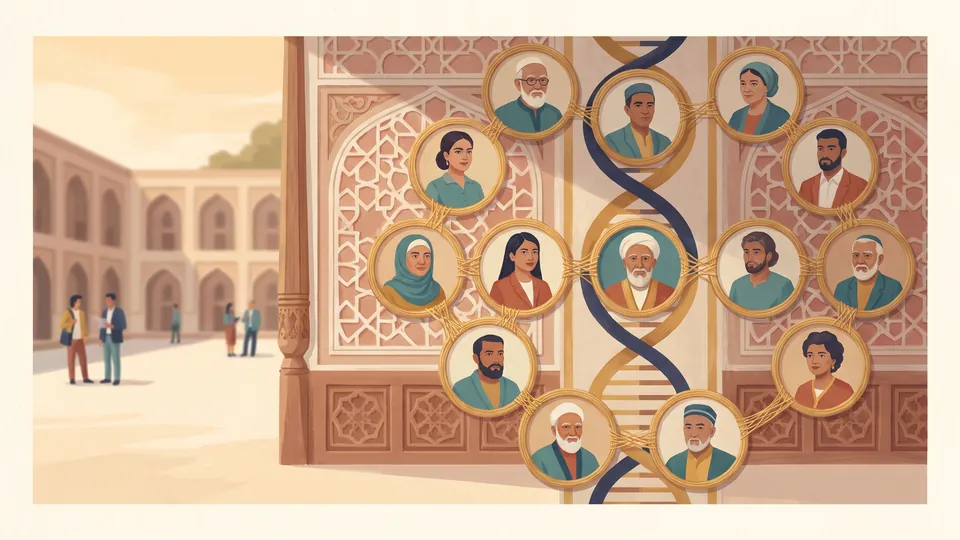
Kinship and the determination of the filiation of children constitute one of the most vital institutes of family law. Every person has the right to know their ancestry, comprehend their familial ties, and possess their filiation. This is a process of not only biological, but also legal, social, and moral significance. In this lesson, we will study the concept of kinship, its degrees, and its lines. We will also analyse the legal nature of affinity and relations between in-laws (quda-andachilik). Throughout the lesson, we will familiarise ourselves with the grounds for establishing the filiation of children, the presumption of paternity in respect of marital children, and the rules governing voluntary and judicial establishment of paternity. Crucial matters such as the establishment of the fact of acknowledgement of paternity, the procedure for disputing paternity or maternity, and the specific legal aspects of determining the filiation of children born through assisted reproductive technologies will also be covered in detail. This knowledge serves as a vital foundation for ensuring the best interests of the child and protecting their rights.
13.1Kinship, affinity, and relations between in-laws
Kinship is a legally recognised relationship between individuals who descend from a single common third party (ancestor) (Family Code, art. 57). In legal terms, kinship is divided into two lines: the direct line and the collateral line. In direct-line kinship, one person descends directly from another. For example, children are first-degree relatives in relation to their parents, whilst a grandchild is a second-degree relative in relation to their grandparents. In collateral-line kinship, persons have a common ancestor, but do not descend directly from one another. This includes brothers and sisters, their children, uncles, aunts, and their children. The degree of kinship is determined by the number of births. Kinship in the direct line is always regarded as closer than in the collateral line. In addition, the legislation distinguishes between full-blood and half-blood kinship (Family Code, art. 58). If brothers or sisters are born of the same parents, they are full-blood siblings. If they share only a common father or only a common mother, they are considered half-blood siblings. Children from previous marriages of spouses are not considered relatives to each other. Affinity and relations between in-laws, on the other hand, are not founded upon consanguinity. These relations arise between the relatives of a husband and wife by virtue of their lawful marriage. Under the law, relations between a spouse and their close relatives and the relatives of the other spouse do not give rise to mutual rights and obligations (Family Code, art. 59). Hypothetical example: Anvar and Malika entered into a lawful marriage. An in-law relationship arises between Anvar's younger brother and Malika's elder sister, but this relationship does not impose upon them any legal obligations such as inheritance or maintenance. This is because legal consequences are primarily tied to consanguinity.
- Persons descending from a common ancestor are considered relatives (Family Code, art. 57).
- Brothers and sisters are full siblings if born of the same parents, and half-siblings if they share only a father or mother (Family Code, art. 58).
- Affinity and relations between in-laws do not give rise to mutual rights and obligations (Family Code, art. 59).
13.2Grounds for establishing the filiation of children
Determining the filiation of a child is one of their most paramount personal non-property rights. Every child has the right from the moment of birth to acquire a surname, a first name, a patronymic, to have an ethnicity and nationality, and to know their parents (Law “On Guarantees of the Rights of the Child”, art. 9). Mutual rights and obligations between parents and the child arise only after the filiation of the child has been registered in the prescribed legal order. According to the legislation, the origin of a child from a particular mother (maternity) is established by the civil registry office (FHDYO) based on documents from a medical institution. If the child was not born in a medical institution, maternity is established on the basis of other evidence (Family Code, art. 60). In establishing paternity, the presumption of paternity based on the fact of marriage applies. A child born to a woman after marriage has been contracted is deemed to have been born in wedlock. Furthermore, a child born within three hundred days after the dissolution of marriage by reason of the husband's death, divorce, or nullity of the marriage is also considered to have been born in wedlock. If a child is born within three hundred days after the termination of a marriage and during this period the woman has entered into a new marriage, the child is presumed to have been born in the new marriage (Family Code, art. 60). In such a situation, the former husband or his parents are entitled to contest the filiation of the child. Hypothetical example: Botir and Nodira dissolved their lawful marriage. Nodira gave birth to a child 280 days after the divorce. Under the law, because this child was born within the 300-day period, Botir is recorded as the child's father, even though they were divorced. This rule was introduced to guarantee the interests of the child and prevent them from being left without maintenance.
- Every child has the right to acquire a name, surname, and patronymic from birth (Law “On Guarantees of the Rights of the Child”, art. 9).
- Maternity is established by the civil registry office (FHDYO) on the basis of medical institution documents or other evidence (Family Code, art. 60).
- A child born within 300 days following the termination of a marriage is deemed to have been born in wedlock (Family Code, art. 60).
13.3Voluntary establishment of paternity
If a child is born to parents who are not in a lawful marriage, their filiation is established under a special procedure. The most common method is the voluntary establishment of paternity. In accordance with the legislation, the paternity of a person who is not married to the child's mother is established upon a joint application submitted to the civil registry office (FHDYO) by the person acknowledging himself as the child's father and the mother (Family Code, art. 61). In this process, the mutual voluntary consent of the parents and the priority of the child's interests are ensured. In certain exceptional circumstances, paternity may also be established solely on the application of the father. If the mother has died, has been declared legally incapacitated by a court, if her whereabouts cannot be ascertained, or if she has been deprived of maternal rights, paternity is established upon the application of the person acknowledging himself as the father, subject to agreement with the guardianship and trusteeship authority (Family Code, art. 61). If the father of the child has been declared legally incapacitated, the application to establish paternity may be submitted on his behalf by his guardian with the permission of the guardianship and trusteeship authority. Nowadays, in order to increase convenience in the provision of public services, an extraterritorial principle has been introduced for establishing paternity. Pursuant to the Rules for Recording Civil Status Acts, an application for the establishment of paternity is considered by any civil registry office (FHDYO) department, regardless of the permanent or temporary registration of citizens (Cabinet of Ministers Resolution No. 550). Hypothetical example: Jasur and Kamola cohabited without entering into a lawful marriage and had a child. In order to establish paternity over the child, they may jointly apply to any civil registry office (FHDYO) department close to their workplace, rather than strictly in the territory where they reside. If the application is refused, the person acknowledging himself as the father may appeal to the court.
- Paternity of an unmarried person is established based on a joint application of the father and mother to the civil registry office (FHDYO) (Family Code, art. 61).
- If the mother has died or been deprived of rights, the father may apply alone with the consent of the guardianship authority (Family Code, art. 61).
- An application for establishing paternity may be submitted to any civil registry office (FHDYO) department based on the extraterritorial principle (Cabinet of Ministers Resolution No. 550).
13.4Judicial establishment of paternity
Where a child is born to parents who are not married to each other and there is no joint application for the voluntary establishment of paternity, paternity is established through judicial proceedings (Family Code, art. 62). This process is aimed at protecting the rights of the child, particularly the rights to maintenance and inheritance. Judicial establishment of paternity is carried out upon an application submitted by one of the parents, the child's guardian (trustee), the person who maintains the child, or by the child themselves upon attaining the age of majority. When establishing paternity, the court takes into account a number of important circumstances and reliable evidence. These include the cohabitation and joint housekeeping of the child's mother and the respondent prior to the birth of the child, their joint upbringing of the child, or their joint maintenance of the child. Nowadays, as a result of scientific advancements, other evidence confirming the paternity of the respondent with certainty, notably the findings of forensic biological (DNA) examination, has acquired decisive significance. The legislation also provides for the institutes of establishing the fact of paternity and establishing the fact of acknowledgement of paternity in cases where the father has died. If a person who was not lawfully married to the child's mother, but recognised himself as the child's father, has died, the fact of his paternity may be established by a court (Family Code, art. 62). In establishing the fact of acknowledgement of paternity, it is proved that the deceased recognised the child as his own during his lifetime (letters, correspondence, provision of care). Hypothetical example: Umida and Sanjar lived together out of wedlock and had a child. Sanjar refused to register the child under his name. Umida filed a claim in court for the establishment of paternity. During the judicial proceedings, based on bank transfers showing Sanjar's financial support of the child and the findings of an appointed DNA examination, Sanjar's paternity was established by judicial procedure. Once the court decision enters into legal force, it is sent to the civil registry office (FHDYO), and the child's filiation is formally recorded.
- In the absence of a joint application, paternity is established judicially upon the application of one parent or a guardian (Family Code, art. 62).
- The court considers evidence such as cohabitation, joint housekeeping, joint upbringing, and DNA testing (Family Code, art. 62).
- If a person who recognised himself as the father dies, the fact of his paternity may be established by the court (Family Code, art. 62).
13.5Disputing paternity (maternity)
The entry regarding birth in the civil register of births is the primary legal evidence confirming that the child was born of the parents indicated therein. However, situations may arise in life where officially registered details do not correspond to the actual biological reality. In such cases, the legislation guarantees the right to challenge (dispute) paternity (maternity). In accordance with Article 63 of the Family Code, a person recorded as the father or mother of a child is entitled to dispute that record judicially within one year from the time when that record became known, or ought to have become known, to them. This one-year limitation period is strict, and runs from the day the person learned that they are not the true biological father or mother. If by that time the person recorded as the father or mother of the child is a minor, the one-year period is calculated from the time that person reaches eighteen years of age (Family Code, art. 63). Disputing paternity is conducted exclusively through judicial proceedings; civil registry offices (FHDYO) are not entitled to amend records arbitrarily. It is important to note that children whose paternity has been established in the lawful order are not legally discriminated against. Pursuant to Article 64 of the Family Code, when paternity is established voluntarily or judicially, children possess identical rights and obligations with respect to their parents and their relatives as children born to persons who are married to each other. Hypothetical example: A child was born while Rustam and Dilnoza were in a lawful marriage, and Rustam was recorded as the father. Three years later, following a medical examination, Rustam learned of his absolute infertility. He is entitled to bring a claim to dispute paternity in court within one year from the day he discovered this circumstance. If the court upholds the claim based on DNA test results and other evidence, the entry concerning paternity in the birth record is annulled.
- The record in the register of births is official proof confirming the filiation of the child (Family Code, art. 63).
- The person recorded as father or mother may dispute it in court within 1 year of learning thereof (Family Code, art. 63).
- Children whose paternity has been established have equal rights and obligations as marital children (Family Code, art. 64).
13.6Assisted reproductive technologies and filiation
The advancement of modern medicine has engendered new institutes in family law, such as the determination of the filiation of children born through the use of assisted reproductive technologies. Under current legislation, artificial insemination, embryo implantation, and surrogacy are regulated within a strict legal framework. In accordance with Article 207 of the Family Code, the spouses who have given their written consent to the implementation of the medical procedure are recognised as the parents of a child born as a result of artificial conception or embryo transfer methods. One of the most complex and sensitive matters in this context is surrogacy. In our legislation, special attention is paid to maintaining a balance between the rights of the surrogate mother and the interests of the child. Persons who are married to each other and have given written consent to the implantation of an embryo into another woman (a surrogate mother) for the purpose of gestation may be recorded as the parents of the child only with the consent of the woman who gave birth to the child (the gestational mother) (Family Code, art. 207). This rule prevents spouses from being registered as the child's parents without the voluntary consent of the surrogate mother, thereby safeguarding maternal rights. If the surrogate mother does not give consent, she remains the legal mother of the child. Hypothetical example: Alisher and Sevara, who are legally married, were unable to have children due to medical conditions and decided to use the services of a surrogate mother through embryo transfer. All procedures took place on the basis of written consent. After the birth of the child, in order for Alisher and Sevara to be registered as the parents of the child at the civil registry office (FHDYO), they must obtain the voluntary and formal consent of the surrogate mother. If the surrogate mother refuses to grant consent, the law stands on her side, and the spouses will not be automatically registered as the parents. This provision serves to prevent human trafficking and conflicts of interest.
- Spouses who have given written consent to artificial insemination or embryo transfer are deemed the child's parents (Family Code, art. 207).
- To record the spouses as parents of a child born to a surrogate mother, the consent of the woman who gave birth is strictly required (Family Code, art. 207).
- The voluntary consent of the surrogate mother is of decisive legal significance in establishing the filiation of the child.
Section 2 of 9
Summary
This lesson thoroughly examined the concept of kinship, as well as the grounds and procedures for establishing the filiation of children. Kinship is divided into direct and collateral lines, with its degree determined by the number of births. Affinity and relations between in-laws arise on the basis of marriage and do not give rise to the legal consequences of blood kinship. Establishing the filiation of a child is one of their most fundamental rights, with maternity determined on the basis of medical documents, and paternity established according to the fact of marriage (including the 300-day presumption). For unmarried parents, mechanisms exist for the voluntary establishment of paternity (joint application) and judicial determination. In judicial proceedings, reliance is placed on reliable evidence such as cohabitation, joint housekeeping, and DNA testing. Furthermore, it was examined that challenging a paternity or maternity record can only be effected through the courts within a strict 1-year limitation period. It was emphasised that in assisted reproductive technologies—a triumph of modern medicine—particularly in surrogacy, the voluntary consent of the woman who gave birth to the child is of decisive importance when determining the child's filiation. These rules serve to comprehensively safeguard the best interests of the child.
Key principles
- 1Consanguinity gives rise to legal relationships, whereas relations between in-laws do not.
- 2From the moment of birth, a child has the right to acquire a name and to know their filiation.
- 3A child born within 300 days after the dissolution of a marriage is deemed to have been born in wedlock.
- 4Unmarried persons may voluntarily establish paternity through a joint application.
- 5In judicial establishment of paternity, the best interests of the child and credible evidence take priority.
- 6Disputing paternity may only be pursued through the courts and within a 1-year limitation period.
- 7In surrogacy, the consent of the surrogate mother is mandatory in order to register the biological parents.
Key terms
- Direct line
- Collateral line
- Half-blood kinship
- Affinity
- Presumption of paternity
- Voluntary establishment of paternity
- Judicial establishment of paternity
- Establishment of the fact of paternity
- Disputing paternity
- Extraterritorial principle
- Assisted reproductive technologies
- Surrogacy
Exam checklist
- Can you correctly calculate degrees of kinship based on the number of births?
- Can you distinguish between the legal consequences of affinity and consanguinity?
- Can you apply the 300-day paternity presumption rule to a practical case?
- Do you know under which exceptional circumstances paternity can be established solely on the father's application?
- Can you explain what evidence is required when establishing paternity through the courts?
- Do you know when the 1-year limitation period for disputing paternity begins to run?
- Can you state the primary condition for establishing the filiation of a child in surrogacy?
Section 3 of 9
Cases (IRAC)
Items marked “Author” are U. M. Maxmudxodjayeva’s own tests, cases and problem questions; the explanations and analysis were added for this book.
Case 1Author’s case
A child born after dissolution of marriage
- Facts
Malika gave birth to a child 280 days after her divorce was formally registered. She stated that the father of the child was not her ex-husband, but Odil, with whom she was currently cohabiting. Odil is also ready to acknowledge paternity. The ex-husband is abroad and wrote in an email that he had nothing to do with the child, but he did not submit an application in the prescribed manner. The civil registry office (FHDYO) official stated that the entry regarding the child's father could not be made solely on the basis of the mother's wishes.
- Issue
The issue of circumventing the presumption of paternity when determining the paternity of a child born within 300 days following dissolution of marriage, and registering the biological father through the civil registry office (FHDYO) or judicial proceedings.
- Rule
Pursuant to Article 60 of the Family Code, a child born to a woman within three hundred days following the dissolution of marriage by virtue of divorce is deemed to be a child born in wedlock. In this scenario, a strict presumption of paternity applies. Furthermore, pursuant to Article 61 of the Family Code, the paternity of a person who is not married to the child's mother is established on the basis of a joint application submitted to the civil registry office (FHDYO) by the person acknowledging himself as the child's father and the mother. However, where the 300-day rule applies, the civil registry office (FHDYO) is obliged to record the ex-husband as the child's father. To prevent this or to amend the entry, Article 63 of the Family Code provides that the person registered as the father or mother of the child, or the actual biological father, may challenge the paternity through judicial proceedings, that is, contest the entry.
- Analysis
- The application of the presumption of paternity upon the birth of a child after dissolution of marriage is strictly prescribed by statute. Given that Malika gave birth to a child 280 days after her divorce was officially registered, this period falls within the statutory 300-day window. Under Article 60 of the Family Code, the ex-husband is automatically deemed the legal father of the child in this situation. The civil registry office (FHDYO) official acted in compliance with statutory requirements and cannot circumvent the presumption solely based on the mother's wish.
- The statements of the mother, the putative biological father (Odil), and the ex-husband do not generate direct legal consequences at the civil registry office (FHDYO) stage. The ex-husband's email or Odil's oral readiness does not constitute a formal legal document. Their intent acquires legal significance only when presented in the statutory form, namely as formal testimony or an application within judicial proceedings.
- Since the matter cannot be resolved through civil registry office (FHDYO) procedures, the interested parties (Malika, Odil, or the ex-husband) must lodge a statement of claim with the court challenging the record in the birth register (contesting paternity). The mother, the registered father (the ex-husband), and the biological father (Odil) must participate in the proceedings as claimant, respondent, or third parties. The priority of the child's best interests is ensured throughout the court proceedings. The court shall comprehensively examine all evidence, including the parties' statements and, where necessary, the findings of a forensic biological (DNA) examination, and render a judgment determining the true biological father.
- Conclusion
In conclusion, the ex-husband is recognized by law as the father of a child born within the scope of the 300-day rule. The civil registry office (FHDYO) has no authority to alter the record upon the mother's application alone. To resolve the situation, the parties must apply to court to contest the paternity entry and prove Odil's biological paternity through credible evidence such as genetic testing.
Discussion questions
- 1How is the application of the presumption of paternity determined where a child is born after the dissolution of marriage?
- 2In what form and manner do the statements of the mother, the putative biological father, and the ex-husband acquire legal significance?
- 3If the issue cannot be resolved through the civil registry office (FHDYO), what claim must be brought before the court and which persons must participate in the proceedings?
Case 2Author’s case
Acknowledgment of paternity by a deceased person
- Facts
A child was born to Sevara and Kamol, who were not married. Kamol acknowledged the child as his own, paid the child's expenses, and told relatives that he had a child, but died before submitting a joint application to the civil registry office (FHDYO). Sevara applied to court to formalize the child's rights. Kamol's other children denied his paternity, arguing that their shares in the inheritance would be reduced. Sevara has correspondence, bank transfer receipts, and witnesses.
- Issue
The issue of establishing the fact of acknowledgment of paternity through judicial proceedings where an unmarried person who recognized the child as his own has died, and a dispute exists among the heirs.
- Rule
Pursuant to Article 62 of the Family Code, where a person who is not married to the child's mother but recognized himself as the child's father dies, the fact of paternity may be established by a court. When establishing paternity, the court takes into account evidence that the child's mother cohabited and maintained a common household with the respondent prior to the birth of the child, or that they jointly raised or maintained the child, or any other evidence clearly confirming the respondent's acknowledgment of paternity. Where a dispute as to a right (such as inheritance) arises in the course of proceedings to establish a fact of legal significance, the case must be heard in ordinary contentious civil proceedings rather than special proceedings.
- Analysis
- Establishing paternity is generally applied while the father is alive and a dispute exists. Establishing the fact of paternity is used in situations where the father has died without acknowledging the child during his lifetime. Establishing the fact of acknowledgment of paternity is the most fitting procedure for this situation, because Kamol recognized the child as his own during his lifetime, paid the child's expenses, and told relatives about the child. This fact is vital for establishing the child's filiation and securing inheritance rights.
- The existence of a dispute as to a right among the heirs (the argument concerning the reduction of inheritance shares) alters the procedural order for hearing the case. In such an event, the court hears the case under ordinary contentious civil proceedings rather than special proceedings for establishing legal facts. In this process, the deceased's other children have the right to participate as respondents or third parties.
- During judicial proceedings, the correspondence, maintenance payments (bank transfers), and witness testimony submitted by Sevara are evaluated under Article 62 of the Family Code as reliable evidence clearly confirming the deceased's acknowledgment of paternity. In addition, if the heirs consent, a potential genetic (DNA) test may be ordered with the participation of close blood relatives of the deceased in order to ensure the priority of the child's best interests. The court makes its final determination on the basis of the totality of this evidence.
- Conclusion
In this scenario, Sevara is entitled to petition the court to establish the fact of Kamol's acknowledgment of paternity. Because a dispute concerning the inheritance exists, the case will be heard in contentious civil proceedings. The court can evaluate all submitted evidence (bank transfers, correspondence, witnesses) comprehensively and issue a positive judgment, thereby upholding the best interests of the child.
Discussion questions
- 1What is the legal significance of the distinction between establishing paternity, establishing the fact of paternity, and establishing the fact of acknowledgment of paternity in this case?
- 2How does the existence of a dispute as to a right among the heirs affect the procedural manner in which the case is heard?
- 3How should correspondence, maintenance payments, witness testimony, and potential expert testing be evaluated?
Case 3
Surrogacy and determination of filiation
- Facts
Jasur and Nodira, who were legally married, were unable to have children due to medical reasons and decided to use assisted reproductive technologies. They gave written consent for their embryo to be transferred into the body of another woman—a surrogate mother (Umida). Umida underwent a successful pregnancy and gave birth to the child. However, after childbirth, Umida announced that she wished to keep the child and would not consent to registering Jasur and Nodira as parents at the civil registry office (FHDYO). Jasur and Nodira, claiming that they are the biological parents and covered all expenses, demand that the child be registered in their names.
- Issue
What is the legal significance of the status and consent of biological parents and the surrogate mother when recording the filiation of a child born through a surrogate mother?
- Rule
Pursuant to Article 207 of the Family Code, persons who are married to each other and gave written consent for the implantation of an embryo into another woman for the purpose of gestation may be registered as the child's parents only with the consent of the woman who gave birth to the child (the biological mother). That is, the voluntary consent of the surrogate mother is established as an imperative statutory condition.
- Analysis
- The legislation establishes a strict rule in surrogacy arrangements: biological parents cannot be recorded as parents in the registers of the civil registry office (FHDYO) without the voluntary consent of the woman who gave birth to the child (Umida) (Family Code, art. 207). This rule was introduced to protect maternity and take into account the psychological bond of the woman who gave birth to the child.
- Even though Jasur and Nodira are the genetic source of the embryo, the law prioritises the rights of the mother who gave birth. Their parental rights are fully realised only upon obtaining the voluntary consent of the surrogate mother. The fact that they covered all expenses does not automatically confer parental rights upon them; it may only form the subject of a civil dispute (damages).
- In the absence of Umida's written consent, the civil registry office (FHDYO) must strictly refuse to register Jasur and Nodira as parents. The dispute may only be adjudicated in court; however, since the statutory text establishes the surrogate mother's consent as the core condition, it is difficult for Jasur and Nodira's claim to be granted.
- Conclusion
In determining the filiation of a child born as a result of surrogacy, the consent of the birth mother is of decisive importance. Without Umida's consent, Jasur and Nodira cannot be registered as the child's legal parents. The civil registry office (FHDYO) is entitled to enter the relevant record only where the statutory consent is present.
Discussion questions
- 1What strict requirement does the legislation impose when determining the parents of a child born to a surrogate mother?
- 2How are the rights of the biological parents (Jasur and Nodira) assessed?
- 3How should the civil registry office (FHDYO) proceed in such a situation?
Section 4 of 9
Quiz
Items marked “Author” are U. M. Maxmudxodjayeva’s own tests, cases and problem questions; the explanations and analysis were added for this book.
Multiple choice
Your answers are saved in this browser.
Open questions
15Author’s questionWhere the person registered as the father in the birth record, the biological father, and the child assert conflicting interests, in what balance should biological reality, established family ties, and the best interests of the child be assessed?
Show model answerHide model answer
Model answer
In family law, striking a balance between **biological reality**, **established family ties**, and the **best interests of the child** when determining filiation is one of the most complex matters. According to the legislation, the record in the civil birth register is the primary evidence confirming parentage (Family Code, art. 63). If a dispute arises between the registered father and the biological father, the court treats the best interests of the child as paramount. On the one hand, a child has the right to know his or her biological origin (Law "On Guarantees of the Rights of the Child", art. 9). Today, establishing biological truth has become straightforward through genetic testing. On the other hand, if the child has lived with the registered father for a long time and formed a strong emotional and psychological bond (established family ties) with him, severing these ties may cause grave harm to the child's psychological well-being. As an alternative approach, the practice of certain foreign jurisdictions (e.g. Germany) prioritises the child's psychological stability over biological reality. In Uzbek judicial practice, courts adjudicating paternity disputes do not rely solely on DNA findings; they also consider the child's age, emotional attachment to the person regarded as the father, and the child's wishes. In conclusion, while biological reality is important, it must be subordinated to the child's best interests in enjoying a stable family environment and psychological peace of mind.16Author’s questionWhere a deceased person acknowledged a child as his own during his lifetime but paternity was not officially formalized, how is the procedural route chosen between establishing a relevant legal fact and resolving a dispute as to a right amid objections from other heirs?
Show model answerHide model answer
Model answer
The issue of establishing the paternity of a deceased person frequently gives rise to disputes concerning inheritance rights in practice. Pursuant to Article 62 of the Family Code, where a person who was not married to the child's mother but recognized himself as the child's father has died, the **fact of paternity** may be established by a court. If the other heirs of the deceased (for example, children from a lawful marriage or parents) object to the child receiving a share of the inheritance, the case must be heard under **ordinary contentious civil proceedings** rather than special proceedings (for establishing facts of legal significance). This is because the issue involves not merely confirming a fact, but a dispute concerning property (inheritance) rights. In such a situation, the court thoroughly examines the deceased's conduct during his lifetime. This includes evidence of the deceased maintaining the child, cohabitation, correspondence, photographs, and witness testimony. An alternative approach is that, where the heirs consent, modern medical testing may be used to carry out DNA analysis through the deceased's close relatives (brothers, sisters, parents). This constitutes the most reliable method for establishing biological truth. Throughout the proceedings, the child's best interests remain paramount, and all evidence must be evaluated objectively to protect the child's rights to maintenance and inheritance.17Where the father of an extramarital child has been declared legally incapacitated by a court, how is the process of voluntary establishment of paternity carried out, and how is the prevention of conflicts of interest ensured?
Show model answerHide model answer
Model answer
Pursuant to Article 61 of the Family Code, if the father of a child has been declared legally incapacitated by a court, an application to establish paternity may be submitted on his behalf **by his guardian with the permission of the guardianship and trusteeship authority**. This rule protects the rights of the incapacitated person while also serving to determine the child's filiation and safeguard the right to maintenance. However, a serious risk of a **conflict of interest** exists in this process. For instance, the guardian may himself be an heir of the incapacitated person. If paternity is acknowledged, the number of heirs will increase in the future, thereby reducing the guardian's own share. Consequently, the guardian might not be interested in submitting the application, or conversely, might provide false information for self-serving motives. To prevent such risks, the legislation requires the mandatory consent of the guardianship and trusteeship authority. The guardianship authority must impartially examine the situation, demand evidence confirming biological connection (such as the findings of a DNA examination), and make a decision based solely on the genuine interests of both the child and the incapacitated person. As an alternative approach, if the guardian unreasonably refuses to submit an application, the child's mother or the guardianship authority itself must have the right to bring a claim to establish paternity through judicial proceedings (Family Code, art. 62). Through this mechanism, the child's rights are fully safeguarded.
Section 5 of 9
Glossary
12 of 12 terms
- Kinship
- A legally recognised relationship between persons descended from a common third person, that is, an ancestor. The proximity of kinship between two persons is determined by the degree of kinship, which corresponds to the number of births.
- Example: The relationship between father and child is the closest form of consanguinity.
- Related:Kinship in the direct lineKinship in the collateral line
- Kinship in the direct line
- A type of kinship established on the basis of biological descent where one person descends directly from another. Children are first-degree relatives in relation to their parents, and grandchildren are second-degree relatives in relation to their grandparents.
- Example: A child, grandchild, and great-grandchild fall into the category of relatives in the direct line.
- Related:KinshipKinship in the collateral line
- Kinship in the collateral line
- Refers to persons who are related through common ancestors but do not descend directly from one another. Examples include brothers, sisters, their children, uncles, and aunts.
- Example: An uncle and a nephew are considered relatives in the collateral line through a common grandfather.
- Related:KinshipKinship in the direct line
- Full-blood kinship
- A type of relationship between brothers and sisters descended from the same parents, that is, having both father and mother in common. They are also referred to as full-blood siblings.
- Example: Two brothers born and raised in the same family are full-blood relatives.
- Related:Half-blood kinshipKinship
- Half-blood kinship
- Kinship between brothers and sisters who share the same father but different mothers, or the same mother but different fathers. In such kinship, the siblings are considered half-brothers or half-sisters.
- Example: Sisters who share the same father but have different mothers are half-blood relatives.
- Related:Full-blood kinshipKinship
- Affinity and in-law relationships
- The relationship between a husband and his close relatives and the wife's relatives. This relationship is not based on consanguinity and does not give rise to mutual rights and obligations by law.
- Example: The relationship between the groom's brother and the bride's sister is regarded as an in-law relationship.
- Related:Kinship
- Presumption of paternity
- The legal rule whereby a child born to a woman after entering into a marriage or within three hundred days following the dissolution of marriage is presumed by law to have been born of that marriage.
- Example: If a child is born two hundred days after spouses divorce, the ex-husband is recorded as the child's father.
- Related:Determination of filiationContesting paternity
- Voluntary establishment of paternity
- The legal determination of a child's father on the basis of a joint application submitted to the civil registry office by parents who are not married to each other.
- Example: Unmarried parents went to the civil registry office (FHDYO) department and jointly acknowledged paternity with respect to the child.
- Related:Judicial establishment of paternityDetermination of filiation
- Judicial establishment of paternity
- The confirmation of paternity by a court in the absence of a joint parental application, based on reliable evidence such as cohabitation, joint household maintenance, or DNA testing.
- Example: After the father refused to acknowledge his child, the mother brought a claim before the court.
- Related:Voluntary establishment of paternityEstablishment of the fact of paternity
- Contesting paternity
- The challenge through judicial proceedings brought by a person entered as the father or mother of a child in the register of births against that entry. A one-year limitation period is provided for this.
- Example: Upon discovering that the child was not his, the ex-husband filed a claim in court within one year to contest paternity.
- Related:Presumption of paternity
- Establishment of the fact of paternity
- The legal confirmation by a court of the paternity of a person who was not married to the child's mother but recognized himself as the father during his lifetime, upon his death.
- Example: Following the father's sudden death, his relatives and the mother applied to the court to establish the fact of paternity.
- Related:Judicial establishment of paternity
- Surrogacy
- The implantation of an embryo created via assisted reproductive technologies into another woman for gestation. In this process, the child's parents are recorded only with the surrogate mother's consent.
- Example: A married couple used the services of a surrogate mother for medical reasons and registered the child in their names with her consent.
- Related:Determination of filiation
Section 6 of 9
Timeline
Development of the Institute of Filiation and Establishment of Paternity
1968
Restriction in establishing the fact of acknowledgement of paternity
It was established that in respect of children born before 1 October 1968, establishing the fact of acknowledgement of paternity was permissible only if the child was dependent on the deceased at the time of or prior to his death.
Significance: Early steps towards protecting the rights of non-marital children during the historical period.
1998
Adoption of the Family Code
On 30 April 1998, the Family Code of the Republic of Uzbekistan was adopted. It enshrined modern rules on degrees of kinship, establishment of filiation, and judicial determination of paternity.
Significance: An independent national legislative framework was created in the field of family law.
2008
Guarantees of the rights of the child
Pursuant to the Law adopted on 7 January 2008, it was guaranteed that every child has the right to acquire a surname, first name, and patronymic from birth, and to know their filiation.
Significance: The right of the child to preserve their identity was aligned with international standards.
2023
Update of civil registry rules
Civil status registration rules were approved by Resolution No. 550 on 20 October 2023. Consideration of applications for establishing paternity was established at any civil registry office under the extraterritorial principle.
Significance: Digital and territorial convenience was created for citizens in voluntary establishment of paternity.
Section 7 of 9
Mind map
Select a node to read its note; a click or Enter opens its branch. Drag to move; pinch or Ctrl + wheel to zoom.
Outline
The same map as a list: it reads well on any screen, with a screen reader and in print.
Kinship and filiation
Determination of children's filiation and kinship relations (Family Code, Chapter 10).
7 branches
1
Types of kinship
Classification of kinship established in Articles 57-58 of the Family Code.
Direct line
Consanguinity passing directly from ancestor to descendant.
1st degree
Relationship between parents and children.
2nd degree
Relationship between grandparents and grandchildren.
Collateral line
Relatives who share a common ancestor but do not descend directly from one another.
Brothers and sisters
Second-degree collateral line relatives.
Uncles and aunts
Third-degree collateral line relatives.
Full-blood
Full siblings born of the same parents.
Half-blood
Half-siblings sharing either a father or a mother.
2
Affinity
Social relations arising on the basis of marriage (Family Code, art. 59).
Without rights and obligations
Does not impose mutual property or personal obligations by law.
Moral norms
Regulated purely by national customs and values.
Relatives of spouses
Connections between distant and close relatives of both parties.
3
Foundations of filiation
Legal recognition of a child's parents (Family Code, art. 60).
Determination of maternity
On the basis of medical institution documents or other evidence.
Medical certificate
Official document issued by a maternity hospital.
Other evidence
Applied when birth occurs outside a medical institution.
Presumption of paternity
A child born during marriage is presumed to be the husband's child.
300-day rule
Where the child is born within 300 days following dissolution of marriage.
New marriage
If the woman enters into a new marriage within 300 days, the child is registered to the new husband.
4
Voluntary paternity
Application by unmarried parents (Family Code, art. 61).
Joint application
Joint application of father and mother to the civil registry office (FHDYO).
Extraterritorial principle
Possibility to apply to any civil registry office (FHDYO) branch.
Father's sole application
Where the mother is deceased or incapacitated.
Guardianship authority consent
Consent of the guardianship and trusteeship authority is mandatory for a sole application.
During pregnancy
May be submitted in advance if applying after birth would be difficult.
5
Judicial paternity
Determination through court in the absence of an application (Family Code, art. 62).
Probative evidence
Facts forming the basis for a court decision.
Cohabitation
Cohabitation and maintenance of a common household.
Genetic testing
Findings of human DNA forensic biological examination.
Fact of paternity
Judicial determination in cases where the father has died.
Fact of acknowledgment
Evidence confirming that the deceased acknowledged himself as the father.
6
Contesting paternity
Challenging a birth entry (Family Code, art. 63).
One-year period
Within 1 year from the time the entry became known.
Upon majority
If the person is a minor, calculated from the age of 18.
Exclusively judicial
Contesting is effected solely through a court decision.
7
Reproductive technologies
Artificial insemination and surrogacy (Family Code, art. 207).
Written consent
Consent of the spouses to artificial gestation.
Surrogate mother
The practice of transferring an embryo into another woman.
Birth mother's consent
Spouses are recorded as parents only with the consent of the woman who gave birth.
Section 8 of 9
Walkthrough and diagram
Animated walkthrough
Step 1 of 6
How is paternity established through judicial proceedings?
Where a child is born to parents who are not married to each other and the father does not submit a voluntary application, paternity is established through the courts. This is vital for safeguarding the child's best interests.
Captions on screen
- Event
- Case
- Institution
- Principle
- Concept
Relationships in this diagram
- Birth of extramarital child → Father does not consent → No voluntary application
- No voluntary application → Mother files in court → Lodging claim in court
- Lodging claim in court → Examination → Civil court
- Civil court → Verifies → Evidence (DNA, cohabitation)
- Evidence (DNA, cohabitation) → If confirmed → Court judgment
- Court judgment → Copy transmitted → Civil registry office (FHDYO) branch
- Civil registry office (FHDYO) branch → Entered in certificate → Paternity registered
- Paternity registered → If contested → Contesting within 1 year
Section 9 of 9
Sources
Sources cited in this topic
- 1Family Code of the Republic of Uzbekistan (30.04.1998)lex.uz · Cited in: chapter, cases, glossary, timeline
- 2Cabinet of Ministers Resolution No. 550 (20.10.2023)lex.uz · Cited in: chapter, cases, timeline
- 3Law “On Guarantees of the Rights of the Child”, No. LRU-139 (07.01.2008)lex.uz · Cited in: chapter, timeline
Recommended reading (syllabus)
- Babajonova D.I., Qilichev X.M., Maxmudxodjayeva U.M., Orazimbetov R.M. Oila huquqi: Darslik. – T.: O‘zbekiston Respublikasi IIV Akademiyasi, 2026. – 220 b. III bob.
Check every source against its current official text before you cite it.
Study text prepared with AI assistance for teaching. It is not legal advice; verify against primary sources before citing.
Built by OXFORDER LLC · Edition 2026.11 · Tashkent State University of Law · Family and Inheritance Law