Topic 10 of 16
Artificial intelligence in succession
11 min chapter8 formatsLecture 2 hSeminar 2 hSelf-study 6 h
Statutory basis: Civil Code, arts 1112–1116, 1145–1146
Download
Subtopics (3)
- Use of artificial intelligence in identifying the object of an estate
- Succession rules regarding artificial intelligence outputs
- Use of artificial intelligence in succession-related notarial acts
Section 1 of 9 · Chapter
Chapter
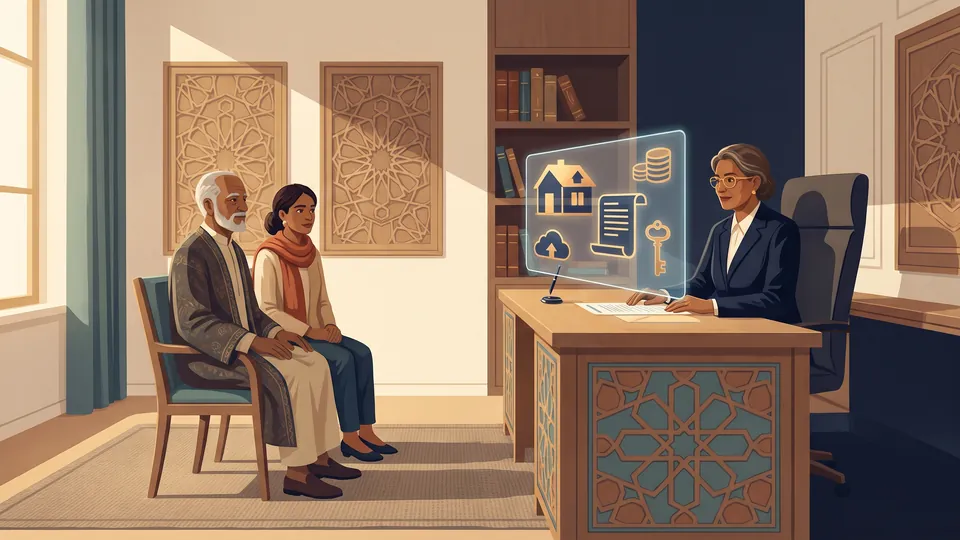
As a result of the rapid development of digital technologies and artificial intelligence, entirely new objects and approaches are emerging in the law of succession. Today, artificial intelligence (AI) systems have already become a vital auxiliary tool in tracing estate property, identifying digital assets, and automating notarial acts. In this lesson, we will thoroughly analyse the role of artificial intelligence in succession relations, its legal status, and its practical application. Throughout the course roadmap, the capabilities of AI in identifying estate property, processes for searching information from electronic registers, and the strict requirements for personal data protection will be studied. In addition, how AI systems themselves are inherited as proprietary rights and the legal limits of using AI in notarial acts will be examined. Primary focus is always placed on the principle of human oversight, that is, the personal liability of the notary and guarantees for protecting the legitimate interests of heirs. This knowledge will serve as a solid foundation for dealing with digital estates in the future.
10.1Artificial Intelligence in Identifying Estate Property
In the law of succession, correctly and fully identifying the composition of the estate is one of the most critical stages. Pursuant to Article 1113 of the Civil Code, the composition of the estate comprises all rights and obligations belonging to the testator at the time of the opening of the succession, which do not terminate with their death. In today’s digital era, citizens' property is not limited solely to traditional tangible items, such as residential premises, a land parcel, or a motor vehicle. Digital assets, social media accounts, electronic wallets, cryptocurrencies, and valuable data stored in cloud storage also possess proprietary value and may constitute an object of the estate. It is precisely at this juncture that artificial intelligence systems enable the swift and highly accurate tracing and locating of assets belonging to the testator across various electronic registers, banking databases, and open sources. With the aid of AI, the testator's digital footprint on the internet can be analysed, identifying undisclosed assets or property forgotten by relatives held in their name. This process serves to constitute the estate fully. Let us examine a hypothetical scenario: upon the sudden death of the testator Anvar, his statutory heirs—his children—were aware only of a flat registered in his name and his monthly salary in a bank account. When the notary submits an enquiry and analyses data using a specialised AI system, he discovers that Anvar held securities on foreign electronic platforms, as well as author's royalties derived from online courses he had created. Consequently, these digital assets identified with the help of AI are lawfully incorporated into the composition of the estate and distributed among the heirs. This example clearly demonstrates the extent to which AI systems are a beneficial and indispensable tool in succession relations. Concurrently, AI software can also expeditiously identify the testator's debt obligations from electronic databases, thereby alerting heirs to prospective financial risks. Thus, AI minimises human error in searching for estate property.
- The composition of the estate includes all rights and obligations that do not terminate upon death (Civil Code, art. 1113).
- Digital assets, accounts, and electronic accounts may constitute an object of the estate.
- AI systems ensure high precision in tracing and analysing property across registers.
10.2Data Protection and Notary Oversight
When utilising artificial intelligence, personal privacy and data protection must be strictly ensured. In accordance with the Constitution of the Republic of Uzbekistan, everyone has the right to the protection of their personal data. The data of persons participating in succession matters require special protection. Pursuant to the requirements of the Law “On Personal Data”, principles of legality, fairness, and confidentiality must be strictly observed in processing data of the testator and heirs. When AI systems process vast volumes of data, necessary technical and legal measures must be implemented to prevent the unauthorised disclosure of family secrets, private correspondence, or medical information. The system must extract solely proprietary information directly relevant to the succession matter and must not infringe upon personal privacy. Crucially, in the legal system, AI is merely an auxiliary tool. Adopting the final decision, verifying heirs, and issuing a certificate of the right to inheritance (Civil Code, art. 1146) are carried out exclusively by a human, namely the competent notary. The notary must personally verify the data provided by AI, be fully satisfied of their lawfulness and reliability, and only then perform the relevant notarial act. For instance, in a hypothetical scenario, the AI system analyses civil registry office (FHDYO) databases and indicates a person as a potential heir of the deceased. However, the notary does not blindly rely on this information; he personally examines official documents confirming the degree of kinship, such as birth certificates. If an error or forgery is found in the documents, the notary rejects the AI's conclusion. This is the practical manifestation of the principle of human oversight, protecting citizens' succession rights from unjustified restriction or unlawful appropriation.
- Everyone has the right to the protection of their personal data (Constitution of the Republic of Uzbekistan).
- Legality and confidentiality must be ensured when processing data (Law “On Personal Data”).
- The issuance of a certificate of the right to inheritance falls exclusively within the competence of a notary (Civil Code, art. 1146).
10.3Artificial Intelligence Systems as Proprietary Rights
Artificial intelligence systems themselves—namely software, databases, licences, and trained algorithm models—may be inherited as objects of intellectual property. If the testator is the software developer who created the AI program or the holder of exclusive proprietary rights in respect of such software, these rights pass to his statutory or testamentary heirs in accordance with general rules. Pursuant to Article 1113 of the Civil Code, all proprietary rights belonging to the testator at the time of the opening of the succession form part of the estate. In accordance with the Law of the Republic of Uzbekistan “On Copyright and Related Rights”, proprietary rights to computer programs and databases pass to the author’s heirs for the author's entire lifetime and after his death. The heirs acquire the right to use, sell, licence, and derive income from this AI system. However, in legal practice, it must be firmly borne in mind that moral rights (personal non-property rights) of copyright are not inherited. These include the right of paternity (the right to be recognised as the author of the work), the right to the author’s name, and the right to the inviolability of the work. As stated in Article 1113 of the Civil Code, they may only be protected by the heirs. Let us illustrate this by way of a hypothetical example: The programmer Botir created a new AI algorithm for diagnosing diseases in the field of medicine and obtained a certificate of authorship for it. Following Botir's death, the right to commercial exploitation of this algorithm and to receive the proceeds therefrom passes by succession to his children. The children may sell the software to large clinics. However, Botir's name must always be indicated as the creator of the algorithm; the children cannot proclaim themselves authors of this AI software. This rule clearly demonstrates the distinction between proprietary rights and moral rights in succession.
- Proprietary rights belonging to the testator, including rights to AI software, are inherited (Civil Code, art. 1113).
- Proprietary rights in computer programs and databases pass to the heirs (Law “On Copyright and Related Rights”).
- Moral rights do not form part of the estate, but are protected by the heirs (Civil Code, art. 1113).
10.4AI-Generated Outputs and the Requirement of Authorship
Outputs generated using artificial intelligence—namely texts, images, music, or inventions—give rise to unique and complex issues in the law of succession. Under the current Law “On Copyright and Related Rights”, only works created through the personal creative labour of a human being are considered objects of copyright. Thus, if any work is created entirely by AI automatically, without the direct creative participation of a human, no copyright arises in respect of it. Since no right arises, it correspondingly cannot constitute an object of an estate. If the testator merely utilised an AI system as an auxiliary tool, akin to a paintbrush or a computer, and made a substantial creative contribution to the work, proprietary rights in respect of this work fully enter the composition of the estate. Moreover, it should be emphasised that Article 1113 of the Civil Code strictly provides that rights and obligations inextricably linked to the person of the testator do not enter the composition of the estate. These include compensation for harm caused to life or health, or maintenance (alimony) obligations. Likewise, certain individual licences created with the assistance of AI, or the right to use accounts tied exclusively to the personal professional qualifications of a specific specialist, may also be deemed inextricably linked to the person and lawfully excluded from succession. Hypothetical scenario: The designer Sardor generated initial sketches using AI, then refined them using computer graphics based on his own creative ideas, producing a unique work of art. This work is deemed a product of human creativity, and all proprietary rights in it pass to Sardor’s heirs. Had he merely entered a single prompt into the AI to produce an image, this image would not be deemed an object of an estate.
- Copyright arises solely in respect of works created by the creative labour of a human being (Law “On Copyright and Related Rights”).
- Outputs created entirely by AI do not constitute objects of copyright.
- Rights inextricably linked to the person of the testator do not enter the composition of the estate (Civil Code, art. 1113).
10.5AI in Notarial Acts and Liability
Utilising artificial intelligence in conducting succession proceedings at notarial offices significantly accelerates legal procedures and reduces the risk of human error. AI systems provide considerable assistance to the notary in verifying the authenticity of various submitted documents, detecting forged documents, searching for statutory heirs across the civil registry office (FHDYO) and other state databases, and correctly determining their priority of succession. Furthermore, the AI system serves as an electronic assistant reminding the notary of important time limits concerning the succession matter. For instance, according to legislation, a certificate of the right to inheritance is issued upon the expiry of six months from the day of the opening of the succession (Civil Code, art. 1146). AI can send an automated notification to the notary that this period has elapsed. However, strict limits exist on automated decision-making within the legal system. No matter how sophisticated and intelligent an AI program may be, it cannot independently perform legally significant acts. All prepared draft documents and analysis results must be meticulously reviewed by the notary, subjected to legal appraisal, and certified with their personal signature and official state seal. If the rights of heirs are infringed due to a technical error in the AI system or an algorithm malfunction, it is not the software, but the notary who certified the notarial act who bears personal liability under the law. This rule serves to ensure reliable protection of citizens' rights and clearly define responsibility in legal proceedings. In short, artificial intelligence does not replace the notary; rather, it remains a modern digital tool enhancing their operational efficiency. Therefore, it is advisable for notaries to remain ever vigilant when applying digital technologies in their activity and to cross-check every piece of information using traditional methods as well.
- A certificate of the right to inheritance is issued 6 months after the opening of the succession (Civil Code, art. 1146).
- AI serves as an auxiliary tool for the notary in verifying documents and identifying heirs.
- Full liability for the legality and consequences of a notarial act remains with the notary.
Section 2 of 9
Summary
The use of artificial intelligence (AI) in succession relations is one of the pressing issues of contemporary law. AI systems are an important auxiliary tool in identifying the testator's digital assets, verifying documents, and tracing statutory heirs. Pursuant to Article 1113 of the Civil Code, all proprietary rights belonging to the testator, including rights to AI software and databases, enter the composition of the estate. However, moral rights and obligations inextricably linked to the person are not inherited. For outputs generated with the aid of AI to be inherited, the presence of a human creative contribution in them is required. In all processes, the requirements of the Law “On Personal Data” must be complied with, and data confidentiality must be ensured. Although the use of AI in notarial offices accelerates the process, automated decision-making is restricted. Adopting the final decision and issuing the certificate of inheritance (Civil Code, art. 1146) fall exclusively within the competence of the notary, and all liability rests upon them.
Key principles
- 1Inheritance of proprietary rights in digital assets and AI software.
- 2Exclusion of moral rights from the composition of the estate.
- 3The requirement of a human creative contribution in AI-generated works.
- 4Lawful and confidential protection of personal data.
- 5Mandatory nature of human (notary) oversight in notarial acts.
- 6Attribution of liability for AI outputs to the notary.
Key terms
- Digital assets
- Artificial intelligence system
- Composition of the estate
- Moral rights (personal non-property rights)
- Proprietary rights
- Personal data
- Human oversight
- Notarial act
- Copyright
- Automated decision
Exam checklist
- What rights and obligations are included in the composition of the estate?
- Which rights in AI software are inherited and which are not?
- Can a work created entirely by AI constitute an object of an estate?
- Why is protecting personal data important in succession matters?
- Who bears liability for an AI error in notarial acts?
- When is a certificate of the right to inheritance issued?
Section 3 of 9
Cases (IRAC)
Case 1
Artificial Intelligence and Personal Data in the Search for Digital Assets
- Facts
Rustam dies suddenly. His son Sanjar, as a statutory heir, applies to a notary to open the succession proceedings. In order to locate his father's undisclosed bank accounts, electronic money, and cryptocurrency wallets, Sanjar requests that the notary employ a specialised artificial intelligence system. He asks to use artificial intelligence to conduct an in-depth analysis of Rustam's email, social media accounts, and entire digital footprint. The notary hesitates to permit this procedure, citing the rules on personal data protection and the inviolability of private life. Sanjar, on the other hand, insists that all digital assets form part of the estate and that searching for them is entirely lawful. In this situation, how are the legal limits of using artificial intelligence to determine the assets comprising the estate established?
- Issue
The legal relationship between the use of artificial intelligence to determine digital assets forming part of the estate and the protection of personal data.
- Rule
Pursuant to the Civil Code of the Republic of Uzbekistan, art. 1113, the estate comprises all rights and duties belonging to the devisor at the time of the opening of the succession that are not extinguished by his death. Personal non-property rights not connected with property rights are not included in the estate. In accordance with the Constitution of the Republic of Uzbekistan, everyone has the right to protection against interference in their private life. Furthermore, under the Law 'On Personal Data', processing of personal data must be carried out in compliance with the principles of legality and fairness, with the consent of the data subject or on other lawful grounds established by law. Strict adherence to these rules is required when searching for succession assets.
- Analysis
- In answer to the first question, all property rights belonging to Rustam, including digital assets, electronic wallets, and cryptocurrencies, are lawfully included in the estate. Pursuant to the Civil Code of the Republic of Uzbekistan, art. 1113, these assets are not extinguished upon the devisor's death and must pass to the heirs. 2) Regarding the second question, conducting an in-depth analysis of the deceased's email and social media accounts using artificial intelligence creates a risk of violating the inviolability of private life and the secrecy of correspondence. In accordance with the Constitution of the Republic of Uzbekistan and the Law 'On Personal Data', the processing of personal data must rest on strict statutory grounds. If the devisor did not grant voluntary consent during his lifetime for access to his data, such AI intrusion may be deemed unlawful. 3) In respect of the third question, it must be emphasised that artificial intelligence serves merely as an auxiliary tool in ascertaining the estate assets. Full responsibility for the accuracy of search findings and the legality of incorporating them into the estate rests with the human being, namely the notary. The notary is bound to ensure compliance with the rules on personal data protection and, where necessary, act on the basis of judicial oversight or appropriate authorisations. Automated systems do not relieve the notary of legal liability.
- Conclusion
In conclusion, digital assets are included in the estate, but in searching for them with the aid of artificial intelligence, legislation on the inviolability of private life and personal data must be strictly observed. Throughout this process, human oversight—specifically by the notary—must be ensured and all actions must be executed within legal boundaries.
Discussion questions
- 1Can all digital assets be included in the estate?
- 2Does searching for personal data using artificial intelligence contravene legislation?
- 3Who bears liability for artificial intelligence findings when searching for succession property?
Case 2
Inheriting an Artificial Intelligence Program and the Works Created by It
- Facts
Software developer Anvar develops specialised artificial intelligence software that composes musical works. Following his death, his daughter Malika applies to a notary as an heir. Malika demands not only to inherit the artificial intelligence software itself as a property right, but also that the copyrights in more than one hundred musical works independently created by this artificial intelligence during Anvar's lifetime be transferred into her name. Malika contends that because these works were generated through her father's program, all economic and moral rights must devolve upon her. The notary, however, encounters difficulty regarding the issue of copyright over outputs generated by artificial intelligence.
- Issue
The succession to artificial intelligence software as a property right and the question of succession to copyright in outputs generated by artificial intelligence.
- Rule
Pursuant to the Civil Code of the Republic of Uzbekistan, art. 1113, all property rights belonging to the devisor form part of the estate. However, personal non-property rights not connected with property rights are not included in the estate. According to the Law 'On Copyright and Related Rights', copyright belongs to an individual (human being) whose creative labour created a work of science, literature, or art. Under the law, only a human being may be an author of a work. The artificial intelligence system itself, as software, constitutes an object of property rights and may be inherited, but the outputs it independently generates are not protected by traditional copyright because they are not the product of human creative labour.
- Analysis
- In answering the first question, the artificial intelligence software created by Anvar is itself recognised as an intellectual property object and a property right. In accordance with the Civil Code of the Republic of Uzbekistan, art. 1113, all property rights in this software, including the rights to use and licence it, lawfully pass to Malika as part of the estate. 2) Regarding the second question, Malika cannot inherit copyright in the more than one hundred musical works created independently by the artificial intelligence. This is because these works are not the direct result of Anvar's creative labour. 3) As for the third question, under the requirements of the Law 'On Copyright and Related Rights', the author of a work must exclusively be an individual, that is, a human being. Artificial intelligence is not a legal subject, and its automated outputs are not protected by traditional copyright. Unless Anvar made a substantial creative contribution to the creation of these musical compositions, such outputs cannot be included in the estate as copyright objects. Personal non-property rights that are inextricably linked to the person likewise do not pass by succession, although heirs are entitled to protect them. Thus, the law strictly imposes the requirement of human authorship with respect to AI-generated outputs.
- Conclusion
In conclusion, artificial intelligence software passes by succession as a property right. However, outputs independently generated by artificial intelligence do not constitute copyright objects because they lack human creative labour, and such rights do not pass to the heir. The law requires a human element for authorship.
Discussion questions
- 1Is artificial intelligence software included in the estate?
- 2Can Malika inherit the copyright in songs generated by artificial intelligence?
- 3What statutory requirements exist regarding outputs generated by artificial intelligence?
Case 3
Artificial Intelligence Error in Identifying Heirs and Notary Liability
- Facts
Following Nodir's death, notary Karim commences succession proceedings. To expedite the process of identifying heirs, Karim uses a new artificial intelligence system that automatically analyses state registers and databases. The AI system identifies only two of Nodir's children as heirs and generates a report stating that there are no other heirs. Placing absolute reliance on this automated conclusion, the notary issues a certificate of inheritance before the expiration of the six-month statutory period. However, two months later, Botir, a son of Nodir from a prior marriage, comes forward and claims his statutory share. It emerges that the AI system failed to locate Botir's records in the database.
- Issue
Reliance on artificial intelligence data when issuing a certificate of inheritance and the notary's liability for the resulting error.
- Rule
Pursuant to the Civil Code of the Republic of Uzbekistan, art. 1146, the notary at the place of the opening of succession is bound to issue a certificate of inheritance to an heir upon their request. A certificate of inheritance is issued upon the expiration of six months from the date of the opening of succession. When inheriting by operation of law or under a will, if the notary possesses reliable information that there are no heirs other than the persons who have applied for the issuance of a certificate with respect to the relevant property or the entire estate, the certificate may be issued prior to the expiration of the aforementioned six-month period. In this regard, the notary bears personal liability for the legality of all actions.
- Analysis
- In answer to the first question, pursuant to the Civil Code of the Republic of Uzbekistan, art. 1146, for a notary to issue a certificate of inheritance before the expiration of the six-month period, he must possess completely reliable data confirming that all legal heirs have been identified and that no other heirs exist. This exceptional rule applies solely where no doubt whatsoever remains. 2) Regarding the second question, an AI system's report indicating that 'no other heirs were found' cannot serve as an adequate and decisive ground for premature issuance of the certificate. Artificial intelligence merely analyses existing digital databases; it may overlook incomplete or non-digitised archival records, such as children from a previous marriage. Automated decisions must not be accepted as final conclusions without human verification. 3) As to the third question, legal liability for errors in the process of identifying heirs and verifying documents rests entirely upon notary Karim. Rather than blindly trusting the AI finding, the notary ought to have conducted additional legal verifications. Botir is fully entitled to claim his statutory succession share and may challenge the notary's actions in court.
- Conclusion
In summary, artificial intelligence functions merely as an auxiliary tool in notarial acts. Legal liability for errors in identifying heirs and the consequences of issuing a certificate prematurely rests entirely with the notary. A notary is duty-bound always to verify the findings of automated systems through human oversight and legal analysis.
Discussion questions
- 1When may a notary issue a certificate of inheritance prior to the expiration of six months?
- 2Can an artificial intelligence report serve as a lawful basis for issuing a certificate prematurely?
- 3Who bears legal liability with respect to an omitted heir?
Section 4 of 9
Quiz
Multiple choice
Your answers are saved in this browser.
Open questions
15How is locating a devisor's electronic wallets and social media accounts using artificial intelligence assessed from the perspective of inheritance law, and what legal restrictions apply?
Show model answerHide model answer
Model answer
A devisor's electronic wallets, cryptocurrencies, and other digital assets are regarded as his property rights and, pursuant to the Civil Code of the Republic of Uzbekistan, art. 1113, are directly included in the estate. Using artificial intelligence to locate them significantly expedites the search process and increases accuracy. However, analysing social media accounts and personal correspondence directly impacts the individual's privacy. Pursuant to the Constitution of the Republic of Uzbekistan and the Law 'On Personal Data', personal data processing must strictly occur on lawful grounds without infringing the secrecy of private life. As an alternative approach, it may be noted that if the devisor during his lifetime provided voluntary consent to access his digital assets—for example, by executing a digital will—data collection via artificial intelligence can proceed without legal impediment. Otherwise, the notary and heirs must rely on judicial supervision or specific statutory authorisations when searching for data. Regardless of how advanced artificial intelligence may be, it cannot circumvent statutory legislation on personal data protection, and human intervention as well as legal oversight are consistently required throughout the process.16A devisor created numerous images and texts during his lifetime using artificial intelligence. How are the rights of the heirs determined in respect of these outputs?
Show model answerHide model answer
Model answer
Pursuant to the Civil Code of the Republic of Uzbekistan, art. 1113, all property rights of the devisor pass into the estate. However, under the Law 'On Copyright and Related Rights', copyright arises exclusively in relation to works of science, literature, and art created by the creative labour of an individual (human being). Because images and texts independently generated by artificial intelligence are not the result of human creation, they cannot constitute objects of traditional copyright under current legislation. Consequently, heirs cannot inherit an author's economic rights—such as exclusive exploitation or licensing rights—in these outputs. An alternative perspective is that if the devisor contributed a substantial degree of creative input to the AI outputs—such as intricate editing or profound conceptual modifications—these works may be recognised as collaborative or derivative works. In such instances, due to the presence of human creative labour, the work is acknowledged as an object of copyright, and the corresponding property rights may lawfully be incorporated into the estate and devolve upon the heirs.17In administering succession proceedings, may a notary fully automate sending reminders to heirs and verifying documents by using an artificial intelligence system? What are the legal ramifications?
Show model answerHide model answer
Model answer
Using artificial intelligence in notarial acts for technical tasks such as verifying documents, collecting data from state registers, and dispatching reminders to heirs significantly enhances operational efficiency. However, complete automation of the decision-making process is legally impermissible. Under the Civil Code of the Republic of Uzbekistan, art. 1146, the duty and competence to issue a certificate of inheritance are vested directly in the notary. Should the artificial intelligence system make an error—such as omitting a statutory heir or validating a forged document—legal liability rests not with the software developer, but with the notary who certified the notarial act. From an alternative developmental perspective, future legislative amendments could introduce automated issuance of electronic certificates for certain straightforward, uncontested succession cases (such as where there is a sole heir and registered property). Nevertheless, within the framework of current legislation, human oversight by the notary, along with his legal appraisal and final signature, remains mandatory. Artificial intelligence continues to serve solely as an advisory and auxiliary tool.
Section 5 of 9
Glossary
11 of 11 terms
- Estate
- The aggregate of all rights and obligations belonging to the devisor at the time of the opening of succession that are not extinguished by his death. This may also encompass property rights in artificial intelligence systems.
- Example: Following Bobur's death, software licences belonging to him were included in the estate.
- Related:Digital assetsPersonal non-property rights
- Digital assets
- Objects existing in electronic form possessing economic value, including accounts, databases, and artificial intelligence programs. They are included in the estate as property rights.
- Example: Azizov bequeathed the digital database he had created to his child.
- Related:EstateArtificial intelligence system
- Personal data
- Information relating to an identified or identifiable natural person. When searching for succession assets, artificial intelligence must lawfully safeguard this data.
- Example: The notary ensured the confidentiality of personal data while searching for heirs using artificial intelligence.
- Related:Human oversight in notarial acts
- Artificial intelligence system
- Software enabling data collection, analysis, and automated decision-making. The system itself may pass by succession as an object of property rights.
- Example: Upon the entrepreneur's death, rights in the artificial intelligence software used in his company passed to his heirs.
- Related:Digital assetsCopyright
- Copyright
- Rights of an individual (human being) who created works of science, literature, or art. Outputs generated by artificial intelligence, in the absence of human creativity, cannot be deemed objects of copyright.
- Example: Because human authorship is required, an image autonomously generated by artificial intelligence was held not to be an object of copyright within the estate.
- Related:Personal non-property rights
- Personal non-property rights
- Rights inextricably linked to the person of the devisor that are not connected with property rights. They do not form part of the estate, but may be protected by heirs.
- Example: The author's personal non-property right to the inviolability of the work is protected by his heirs.
- Related:EstateCopyright
- Opening of succession
- The commencement of succession relations resulting from the death of a citizen or the judicial declaration of a citizen as deceased. Artificial intelligence reminder systems may be activated during this process.
- Example: The succession opened on the day of the citizen's death, and the notary commenced verification of digital registers.
- Related:Place of the opening of successionHeir
- Place of the opening of succession
- The last permanent place of residence of the devisor or the location of his immovable property. Artificial intelligence assists in identifying this address from public registers.
- Example: As the devisor's last place of residence was unknown, artificial intelligence identified the locality where his principal immovable property was situated.
- Related:Opening of succession
- Heir
- Citizens surviving at the time of the opening of succession, as well as children conceived during the devisor's lifetime and born alive after the opening of succession. Artificial intelligence is employed to locate them within databases.
- Example: The notary identified all statutory heirs from the civil registry office (FHDYO) database using artificial intelligence.
- Related:Opening of successionCertificate of inheritance
- Certificate of inheritance
- A document issued upon the request of an heir by the notary at the place of the opening of succession, confirming their right to the estate. In formalising this instrument, artificial intelligence acts solely in an auxiliary capacity.
- Example: After six months had elapsed, the notary verified all documentation and issued the certificate of inheritance to the heir.
- Related:Human oversight in notarial actsHeir
- Human oversight in notarial acts
- The principle that even where artificial intelligence systems verify documentation and identify heirs, final decision-making and legal liability remain strictly with the notary (a human being).
- Example: Although the artificial intelligence system misidentified an heir, the notary corrected the error through his own oversight.
- Related:Certificate of inheritancePersonal data
Section 6 of 9
Timeline
Development of Succession Relations and Digital Rights
29.08.1996
Adoption of the Civil Code
The Civil Code of the Republic of Uzbekistan was adopted, defining the composition of the estate, the opening of succession, and the circle of heirs.
Significance: The primary statutory framework of the law of succession was established.
02.07.2019
Law on Personal Data
The procedure for collecting, processing, and protecting personal data was established. This ensures confidentiality when tracing digital assets.
Significance: Data protection was guaranteed when tracing heirs through artificial intelligence.
30.04.2023
Adoption of the Constitution in New Wording
The new Constitution of the Republic of Uzbekistan was adopted, strictly establishing state guarantees for the inviolability of private property and the right of inheritance.
Significance: The supreme guarantee of the right of inheritance was established with respect to digital property and artificial intelligence objects.
Section 7 of 9
Mind map
Select a node to read its note; a click or Enter opens its branch. Drag to move; pinch or Ctrl + wheel to zoom.
Outline
The same map as a list: it reads well on any screen, with a screen reader and in print.
Succession and Artificial Intelligence
The role of digital technologies in succession relations
5 branches
1
Ascertaining the estate property
Searching for property pursuant to Civil Code, art. 1113
Searching for digital assets
Locating accounts and crypto-assets
Analysing registers
Gathering data from state databases
Data accuracy
Mitigating errors through AI
2
The AI system as an estate asset
Software as a property right
Rights in software
Bequeathing code
Databases
Compilations of gathered data
Licences
Devolution of the right of use
3
Outputs generated by AI
Copyright issues
Human authorship requirement
The author must exclusively be an individual
Copyright law
Statutory requirements
Exceptional cases
Degree of human participation
Non-copyrightable status
Works autonomously generated by AI
Absence of property rights
Exclusion from the estate
Personal non-property rights
Pursuant to Civil Code, art. 1113
Protection
Protection by heirs
4
AI in notarial acts
Automating notarial functions
Document verification
Detecting forged documents
Expedited analysis
Time efficiency
Identifying heirs
Tracing kinship ties
Civil registry office (FHDYO) database
Systems integration
Automated reminders
Monitoring the six-month period
Lapse of time
Civil Code, art. 1146
5
Human oversight and safeguards
Liability and security
Notary liability
Final decision rests with a human being
Data protection
Preserving confidentiality
Boundaries of decision-making
AI functions strictly as an auxiliary tool
Section 8 of 9
Walkthrough and diagram
Animated walkthrough
Step 1 of 6
Administering Succession Using Artificial Intelligence in Notarial Acts
The process whereby notaries use the capabilities of artificial intelligence as an auxiliary tool in conducting succession proceedings.
Captions on screen
- Event
- Institution
- Concept
- Principle
- Case
Relationships in this diagram
- Opening of succession → Application → Notary
- Notary → System launch → AI auxiliary system
- AI auxiliary system → Register analysis → Search for assets
- Search for assets → Confidentiality condition → Data protection
- Data protection → Verification of results → Human oversight
- Human oversight → Confirmation → Issuance of certificate
- AI auxiliary system → AI error → Arising of dispute
- Arising of dispute → Resolution by notary → Human oversight
Section 9 of 9
Sources
Sources cited in this topic
- 1Civil Code of the Republic of Uzbekistan, Part Two (29.08.1996)lex.uz · Cited in: chapter, cases, glossary, timeline
- 2Law “On Personal Data”, No. ZRU-547 (02.07.2019)lex.uz · Cited in: chapter, cases, glossary, timeline
- 3Law “On Copyright and Related Rights”, No. ZRU-42 (20.07.2006)lex.uz · Cited in: chapter, cases, glossary
- 4Constitution of the Republic of Uzbekistan (30.04.2023)lex.uz · Cited in: chapter, cases, timeline
Recommended reading (syllabus)
- Yuldashev J.I. Vorislik va oila huquqi. Darslik / yuridik fanlar doktori, professor, O‘zbekistonda xizmat ko‘rsatgan yurist O. Okyulovning umumiy tahriri ostida. – T.: TDYUU nashriyoti, 2024. – 295 b. (Asosiy)
- Vorislik huquqi: nazariya va amaliyot. O‘quv qo‘llanma. U. Maxmudxodjayeva, M. Usmonova. Toshkent, 2025. 148 b.
- Fuqarolik huquqi. 2-qism. Darslik. Mualliflar jamoasi. Toshkent, 2017. 428 b.
- Załucki, Mariusz. “Impact of the EU Succession Regulation on Statutory Inheritance.” Comparative Law Review 23 (February 7, 2018): 223. http://dx.doi.org/10.12775/clr.2017.010. (Qo‘shimcha)
- Avsec, Franci. “Legal Framework of Agricultural Land/Holding Succession and Acquisition in Slovenia.” Journal of Agricultural and Environmental Law 16, no. 30 (April 30, 2021): 24–39. http://dx.doi.org/10.21029/jael.2021.30.24. (Qo‘shimcha)
- Szeroczyńska, Małgorzata. “People with intellectual disabilities as heirs. Part 2.” Special School LXXXI, no. 3 (June 30, 2020): 224–35. http://dx.doi.org/10.5604/01.3001.0014.2361. (Qo‘shimcha)
Check every source against its current official text before you cite it.
Study text prepared with AI assistance for teaching. It is not legal advice; verify against primary sources before citing.
Built by OXFORDER LLC · Edition 2026.11 · Tashkent State University of Law · Family and Inheritance Law